


Erhalten Sie Zugang zu diesem und mehr als 300000 Büchern ab EUR 5,99 monatlich.
- Herausgeber: Jonathan Ball
- Kategorie: Sachliteratur, Reportagen, Biografien
- Sprache: Englisch
Here is the Cape Town underworld laid bare, explored through the characters who control the "protection" industry – the bouncers and security at nightclubs and strip clubs. At the centre of this turf war is Nafiz Modack, the latest kingpin to have seized control of the industry, a man often in court on various charges, including extortion. Investigative journalist Caryn Dolley has followed Modack and his predecessors for six years as power has shifted in the nightclub security industry, and she focuses on how closely connected the criminal underworld is with the police services. In this suspenseful page-turner of an investigation, she writes about the overlapping of the state with the underworld, the underworld with the 'upperworld', and how the associated violence is not confined to specific areas of Cape Town, but is happening inside hospitals, airports, clubs and restaurants and putting residents at risk. A book that lays bare the myth that violence and gangsterism in Cape Town is confined to the ganglands of the Cape Flats – wherever you find yourself, you're only a hair's breadth away from the enforcers.
Sie lesen das E-Book in den Legimi-Apps auf:
Seitenzahl: 375
Veröffentlichungsjahr: 2019
Das E-Book (TTS) können Sie hören im Abo „Legimi Premium” in Legimi-Apps auf:
Ähnliche


















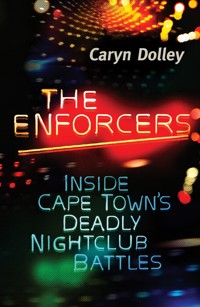
THE ENFORCERS
INSIDE CAPE TOWN’S
DEADLY NIGHTCLUB BATTLES
Caryn Dolley
Jonathan Ball Publishers
Johannesburg & Cape Town
To my family, by both relation and sheer care.
And to those finding their way to good.
Abbreviations
ANCAfrican National Congress
CBDcentral business district
CCBCivil Cooperation Bureau
CoreCommunity Outreach
DADemocratic Alliance
IMSIinternational mobile subscriber identity
IpidIndependent Police Investigative Directorate
MKumKhonto weSizwe
MKsmembers of umKhonto weSizwe
NPANational Prosecuting Authority
PagadPeople Against Gangsterism and Drugs
PSIRAPrivate Security Industry Regulatory Authority
SAPSSouth African Police Service
SARSSouth African Revenue Service
SPSSpecialised Protection Services
TRCTruth and Reconciliation Commission
TSGThe Security Group
WeccoWestern Cape Community Outreach
Foreword
The roots of this extraordinary book go back to 2011, when Caryn Dolley was a reporter on the Cape Times.
Caryn was a journalist who could take on any story. But it was the stories about the underworld that drew her from the start and which were to become her main focus as a reporter, first at the Cape Times and later at the Sunday Times, the Weekend Argus, News24 and amaBhungane.
Ours was a newsroom with many talented reporters but Caryn stood out. More than anyone, she could get people to talk to her. People who thought they had decided not to talk to anyone, talked to Caryn. She would go out on a story and bring back to the news editors the interview no-one else had been able to get, with the gang boss, the international mobster, the crooked cop – or the mother who had lost a child.
She would win people over with her quiet manners, her willingness to listen and her integrity. Somehow, people knew they could trust her, that she would respect the anonymity of a source or a promise to keep something off the record, and, most of all, that she would do her best to report accurately. Gang bosses confided in her; whistleblowers trusted her with their lives.
She navigated the peculiar shifting moralities of the underworld without compromising her own ethics as a journalist and a storyteller. She was fearless, as the big powerful men who mistook her diminutive size and gentle manner for weakness soon learned. And she did her research meticulously. Over the years she has doggedly poked and prodded at the underworld, accumulating the wealth of knowledge and the network of contacts which have made this book possible.
Using the ‘bouncer wars’ in Cape Town’s nightclubs as her starting point, Caryn has opened a window onto the world of organised crime. She has stuck her nose into the affairs of some of the most dangerous men in the country, at considerable risk to herself. She has been threatened several times, and for a while had to have personal protection.
To write this book, Caryn has sat through long bail hearings and criminal trials, read interminable court documents, and interviewed gangsters, drug lords, police officers and politicians, to reveal the intricate links between them, and the way the turf battles on the streets of the Cape Flats are mirrored in the turf battles in the carpeted corridors of political power.
Caryn takes the reader from the pumping nightclubs of Long Street in Cape Town’s city centre to Johannesburg, which has the reputation of being South Africa’s most notorious underworld hub; and beyond, to Serbia in Eastern Europe. Her story ranges from the quiet formality of courtrooms to the luxury hotels where the corrupt meet; and from the bloodstained streets where the gangs rule to government offices and police stations.
It’s a story of stolen guns and crooked cops, of lethal games played by politicians, of gangs and gangbusters, of bouncers and drugs and very large sums of money.
It’s also the story of what Caryn calls ‘the street-level people’: the families torn apart by gang violence, the passersby mown down in crossfire, the partygoers caught in a nightclub war – and all the other victims of the crime bosses, the corrupt police officers and the corrupt politicians.
Alide Dasnois
Editor, Cape Times (2009–2013)
Winner, Nat Nakasa Award for Media Integrity (2014)
Cape Town, March 2019
‘Since the turf war started, patrons are very nervous and the public order in the CBD is under attack. … [I]t is clear that the safety of the public is at risk and the public order is being disturbed… The problem with these club takeovers and war is that innocent bystanders have been shot.’
– Lieutenant Colonel Peter Janse Viljoen, 31 January 2018, Bellville, Cape Town.1
Prologue
It’s a Wednesday in March 2017, around lunchtime, in the northern suburb of Parow in Cape Town. Although nearing autumn, it’s unseasonably warm, and the sun beats down out of a clear blue sky.
Near-identical townhouses line a wide, treed street. The occasional bark of a dog is the only sound that breaks the midweek suburban peace and quiet – the hum of cars passing on the nearby highway and the gentle rustling of leaves pleasantly combine in this neighbourhood where children can ride their bikes in relative safety.
Suddenly a large, dark vehicle pulls up outside one of the houses – the one with the ‘Property for Auction’ poster tied to its front gate. Eight burly men emerge, looking suspiciously up and down the street.
Within seconds, four minibus taxis arrive too, and an additional motley assortment of men, some armed with shotguns, pile out. They position themselves along the road in front of the property.
It’s immediately clear who’s in charge. He’s not the biggest man present but there’s something about the way he carries himself – nonchalant yet confident, his arms hanging loosely at his sides with his chest puffed out ever so slightly – that sets him apart. He wears a faint goatee and thin moustache, and his fingers are studded with chunky diamond rings.
He walks with a proprietor’s air through the gate of the property advertised for auction – for this house does actually belong to him, at least until the auctioneer bangs his gavel.
Some of his men follow him; others remain on the street, watching.
Inside are at least another thirty people, and the goateed man scans the small crowd. He notes that several of them are armed.
His characteristically cocked eyebrows lower and his posture tenses as he spots who he’s looking for. It’s a strapping, chisel-faced blond man, his expression one of cocky self-assurance. He’s laughing at something another man has just said.
The goateed man grits his teeth in anger and resentment: the humiliation of his recent sequestration has been made a thousand times worse by this man, who just this morning bid on and bought another property of his that had gone under the hammer. And here he is again, apparently intent on securing a second bargain at his expense.
The goateed man strides towards the blond man, his men on his heels and fanning out on either side of him. The strapping blond glances up, seems to assess the situation in a second, and without visibly making any move, somehow alerts a posse of men, who quickly whip into place behind and on either side of him.
As the two groups face off, there’s a long moment of tense silence. Then one of the blond’s henchmen, out on the flank, pulls out a gun and points it menacingly at his counterpart. There’s a feeling of electricity in the air.
The goateed man’s sidekick doesn’t bother to pull his weapon, although it’s clearly visible at his waist. Instead, fuelled by bravado and steadfastly refusing to cower in front of a rival, he cocks his head and grins hideously at the gun-wielding heavy. ‘Go on, do it,’ he goads, his voice barely above a whisper. ‘Shoot me.’
The storm breaks, the suburban back yard igniting into a battlefield as the two groups clash.
Jostling, shoving men, throwing punches and kicks, spew into the street. Shouts and thuds fill the air as punches are thrown and blades are drawn; skin is ripped open, flesh is bruised, blood is shed.
The realisation that the longer the melee goes on, the more probable death is, seems to dawn on all simultaneously, and men begin fleeing, some nursing swollen faces, some limping, some awkwardly clutching arms battered by gun butts and barrels. The exodus takes only a few moments, and the leaders of the two groupings are last to leave.
As the blond makes for a waiting vehicle, the goateed man shouts his name and he turns back.
The goateed man points a finger at the blond and says, ‘You take what’s mine and I’ll take what’s yours.’
INTRODUCTION
When worlds collide
At night, from a distant and elevated viewpoint, Cape Town sprawls resplendent at the foot of Table Mountain, its lights shimmering and flickering, a conglomeration of tiny twinkling gems.
Zoom in on this mesmerising scene and a raw slice of nightlife emerges. On any weekend evening in Long Street, the city’s famous party hub, throngs of bright- or bleary-eyed revellers pack the pavements, young men and women dressed up for a night out, laughing and chatting, pub-hopping, dashing across the roads and meandering down the sidewalks, popping into and out of the restaurants and clubs on this renowned stretch of inner-city one-way road.
Black-clad muscle-bound bouncers stand stoically beneath glowing lights at establishment entrances, alternately frowning and smiling. Informal car guards, some wearing grubby yellow vests, noisily direct metered taxis and private cars moving sluggishly along the street’s length, pointing out rare vacant parking bays between bumper-to-bumper stationary vehicles. A few homeless men and women in worn-out clothes weave wearily between the clubgoers.
This lit-up and blaring version of Long Street can ignite a sense of thrill and adventure. But more often than not, the blinking blue light of a police van slices through the merrymaking: a niggling reminder of what’s on the other side of this fun façade. For Cape Town has a parallel reality, where nightclub fluorescents and police lights can merge, and the sound of party beats can cover the crack of bullets. It’s where the frivolous can meet the fatal.
Beneath the glittering and gritty veneer – a dazzlement of erratically flashing lights, grubby bar surfaces, and sticky dance floors mottled with scuff marks – secrets both decades old and tantalisingly fresh float around Cape Town’s nightclubs. What is obviously visible may not be what it seems, and looks really can be deceiving – a fellow clubgoer may be not just another reveller but a state informant, a plainclothes police officer or even a contract killer hired to carry out an assassination.
The city’s mostly concealed underbelly crawls with characters from all walks of life, from within the country and from across South Africa’s borders, and who all share a lust: for power, for money, for political influence and dominance, for access to intelligence circles. Some harbour dangerous secrets that feed long-held grudges that have grown over the years, continuously sprouting, blooming and producing seeds of mistrust and vengeance.
The Mother City’s security turf battles have their roots in pre-democratic South Africa, and branch into the Cape Flats gang wars that have ebbed and flowed since the 1990s. Dotting this landscape are colourful and contentious figures – Yuri ‘the Russian’ Ulianitski, nightclub-security kingpin and apartheid-state operative (or so it’s rumoured) Cyril Beeka, convicted drug dealer Radovan Krejčíř, alleged gangsters Jerome ‘Donkie’ Booysen and Ralph Stanfield, controversial businessmen Nafiz Modack and Mark Lifman – many of whom have come to a bad end. And constantly making surprise appearances in what are often questionable circumstances are high-ranking members of the South African police as well as prominent people in the ANC and the government.
Cyril Beeka, who had suspected links to all these spheres – politicians, police officers and at least one gang – was gunned down in March 2011. By 2017 Nafiz Modack, a close friend of Beeka’s, had become the latest figure identified by police to allegedly be heading up a group hell-bent on taking over control of the lucrative nightclub-security operations in the Western Cape. By September that year Modack and a few others – including convicted cop killer Colin Booysen and an elusive United Kingdom businessman known as Choudhry – were, according to Modack himself, providing security to more than 95 percent of nightclubs in and around Cape Town.
Just five years earlier, however, the situation had looked somewhat different, with a man named Andre Naude, who’d been in the bouncer business since the early 1990s, together with Colin Booysen, Colin’s brother Jerome ‘Donkie’ Booysen, and Mark Lifman running the majority of security operations at nightclubs in Cape Town.
These switches of allegiance and power shifts are common ingredients in an internationally recognised and lethal recipe that has repeatedly been followed in South Africa to brew up intense and reverberating batches of violence. Cape Town’s central business district (CBD), the ‘city bowl’, in particular, has provided the perfect oven for this phenomenon, resulting in the frequent bubbling-over of extreme and often deadly tensions.
The battles to guard Cape Town’s nightclub doors centre around bouncers. These strong men are at the literal forefront of nightclub security – but they aren’t just visual deterrents to those with untoward intentions. Bouncers represent muscle in underworld circles, which in turn represents power – a critical criminal currency. If you have control of the door of an establishment, you have control of who or what passes through it.
This is where a one-dimensional power struggle to dominate a doorway expands into much broader and more complicated battles.
Money acquired through both legal and illicit activities, including the taking over or hijacking of businesses, drug-trafficking operations, and money made indirectly from the forging of ties between gangs (and illegal trades), can be used to influence or buy off officials in legitimate businesses or within the state – police officers and politicians aren’t immune to this, and the greedier an individual, the softer a target they pose. So, for example, cash can be slipped to a cop who in exchange turns a blind eye to illegal dealings. And this is where the murkiness starts – when the legal becomes entangled with the illegal.
The dinginess goes even deeper when state officials start working alongside underworld figures and when top state officials meddle in underworld activities or mingle in underworld circles. It’s been happening for many years, and it’s made it consistently difficult to unravel whether elements within the state are aiding and abetting underworld figures, or are infiltrating them as part of a greater intelligence-driven plan to ultimately cripple their activities.
Further fuelling confusion is when underworld figures become state informants, thereby ‘legitimising’ their activities in that they’re leaking information to authorities and are thus, in a warped but crucial manner, playing a role in fighting crime.
And sometimes this plays out in reverse, when an initially upstanding state informant or police investigator, rich in highly sensitive and even classified information, becomes an underworld figure. Secret information at their disposal could present itself as a master key able to unlock doors of their choice or as an invisible weapon to force individuals to act on their command.
Duplicitous individuals feed the underworld monster, encouraging it to grow and enabling it to rampantly spread. Key investigating police officers have admitted that for every tentacle chopped off, several more rapidly grow back. This is because these battles aren’t simply street fights; they’re an integral part of South Africa’s invisible, historic and ongoing proxy wars, with individuals and groups secretly acting on behalf of state intelligence agencies. It’s this that makes poking or prodding the underworld especially perilous: you could disturb an ever-mutating species from which there is no set form of protection.
Trying to wrangle it from the point of view of law enforcement has profoundly affected the career paths of many cops. Among them are Major General Andre Lincoln, who was ejected from the police and had to fight his way back in; Major General Jeremy Vearey, who helped incarcerate an array of gangsters and headed up several probes into suspected crime kingpins, yet who himself has been the subject of countless claims that he’s involved in organised crime; and Lieutenant General Peter Jacobs, who has worked in the intelligence sector, and who was effectively demoted while co-leading South Africa’s biggest-ever firearms-smuggling investigation that was closing in on both gangsters and corrupt cops.
These three officers operate in a grimy reality muddied by decades of claims of dirty police officers partnering with underworld figures in order to, among other things, tarnish the reputations of their colleagues to sink their critical investigations.
Combine all these characters who repeatedly crop up in and around Cape Town’s clubbing arena for various reasons – gangsters (suspected or otherwise), underworld figures and cops – and season with the inevitable pinch of politics, and you’ve got a war. It’s a war with very high stakes, no parameters, and invisible crosshairs in which anyone can get caught.
CHAPTER 1
Apartheid’s bouncer blueprint
Like Cape Town, Johannesburg has a nightclub-security industry that has been gripped by controversy and tainted by violence over the years. The seeds that sprouted bouncer operations in South Africa’s city of gold were men from white working-class sports and boxing clubs who were based in Hillbrow, as well as south and east Johannesburg.
‘Sharing a background of apartheid-era military service, the bouncers evolved from independent “heavies” into a set of registered private security companies competing for turf and control of the illicit drug trade,’ say researchers Mark Shaw and Simone Haysom in a 2016 article on organised crime towards the end of apartheid and Johannesburg’s ‘bouncer mafia’.1 ‘Changes in the prevailing political and socioeconomic environment of the country during the transition to democracy were reflected in structural changes in the city’s night-time economy; this led to the consolidation of the bouncer mafia.’2
Elements of this article were nothing new. Back in 1997 the African National Congress (ANC), in its third year of governing democratic South Africa, noted that the National Key Points Act of 1980 had ‘created another network of collaboration between the apartheid security forces and the private sector’. ‘The militarisation of South African security companies is evident to this day,’ the party stated. ‘Many senior personnel from the state’s security establishment joined private companies on retirement.’3
Under the terms of the Act, which enabled the Minister of Police to declare a location critical and in need of special security, hundreds of locations, including mines and factories, had been deemed national key points. ‘Owners [of these places] were required to provide and pay for security as well as set up security committees jointly with the South African Defence Force which included recommended private security consultants,’ the ANC said. The effects of the legislation, according to the ANC, had included shifting some of the responsibility for so-called national security onto the private sector, and this had resulted in a thriving private-security industry which incorporated aspects of the state.4
The situation in Cape Town geographically reflects what the ANC said, in that the proximity of places of law to places where underworld tensions have boiled over is sometimes quite striking – as if dubious private security-related matters have actually spilled over onto state structures. For instance, Cape Town’s central police station is situated alongside a strip club, Mavericks; nearby are the Cape Town Magistrate’s Court and the Cape Town Regional Court.
Within walking distance is the Western Cape High Court; if you sit on the steps leading up to its entrance and look straight ahead, you can see a portion of the well-known and popular Long Street in the CBD. Two roads running parallel to Long – Loop and Bree streets – are also home to many establishments that make use of private security.
Finally, Parliament is sandwiched between the Cape Town central police station and the Western Cape High Court.
While the reignited nightclub-security takeover of 2017 was by no means limited to the centre of Cape Town, several violent incidents played out there, unfolding right under the nose of the police, practically on the doorsteps of three courts of law and literally around Parliament – South Africa’s legislative core.
But this has been happening for decades.
In their article, Shaw and Haysom linked the Johannesburg bouncers to crimes including extortion and drug trafficking, as well as to politics – and to two individuals in particular. ‘There was a political imprint to their operation, both to the security services of the apartheid state and later to the security institutions of the new democracy,’ the researchers noted. ‘Figures in the bouncer mafia were connected to Ferdi Barnard and the Civil Cooperation Bureau (CCB) and later involved in the notorious assassination of Johannesburg mining magnate and ANC funder Brett Kebble.’5
On 27 September 2000, Ferdinand ‘Ferdi’ Barnard, the apartheid-era murderer of anti-apartheid activist David Webster, testified in a Truth and Reconciliation Commission6 amnesty hearing. He had joined the South African Police Force in 1976, he said, and had worked in various units, including narcotics, until 1984, when he was sentenced to twenty years ‘due to murder and other offences’.7 His effective jail time, due to some sentences running concurrently, was six years, and he was released on parole after only three years behind bars.
Around 1987 he joined the notorious CCB, a government-sponsored death squad during the apartheid era that operated under the authority of Defence Minister General Magnus Malan. His next employment, eighteen months later, was with the Directorate of Covert Collection, which involved the gathering of intelligence.
Barnard testified that what both the CCB and the Directorate of Covert Collection ‘wanted, and were intensely interested in from the very beginning … were … my criminal contacts, my contacts in the criminal underworld, the networks that I had due to my contacts as a policeman, the informers that I had handled’.8
Barnard detailed what he needed to do to worm and connive his way into the heart of underworld operations. ‘To effectively penetrate criminal networks in places where it would matter – and I’m not talking about your average mandrax merchant because they’re a dime a dozen – to infiltrate persons who had actual access, firstly to establish yourself in a convincing manner, you would have to do illegal things necessarily, there would be no way in which such persons would trust you if you just told them a story or tried to con them. That is not the way it worked. Secondly, unfortunately it is the case that when one is with such persons ... one would be tested… so you would have to be prepared to go the extra mile.’9
Barnard, who admitted to using cocaine – a drug that’s still closely associated with the underworld – testified about being involved in private security and further acknowledged entering into corrupt transactions with police and being involved in brothels. His testimony was eerily prophetic about what unfolded in Cape Town’s underworld decades later; these aspects – claims involving drugs, private security, corruption and cops – and others, including violence, were nearly all the same components causing ructions in Cape Town’s underworld in 2017 and 2018.
‘At the same time of my involvement with … the brothels and the porn palaces and the escort agencies, and the nightclub life that I led, I also established private systems by which I was the head of security of eight or nine nightclubs, brothels and perhaps five or six casinos as well,’ Barnard continued. ‘I placed the bouncers there, I visited the places daily, I addressed security problems, conducted sensitive investigations, I paid off the police who had to be paid off to prevent police raids. I identified the crooked cops, I gave them their monthly pay.’10
Barnard seemed to have drawn up a blueprint of how bouncer operations in South Africa were to be conducted, and his activities and those he mingled with became part of an enduring formula consisting of three key factors: security of nightclubs being headed up by an individual, bouncers being placed at doorways, and corrupt cops. Indeed, this bouncer-operation blueprint crafted under apartheid by a criminal cop working for that regime was still being followed years later under a democratic government. This implies that certain elements of corruption segued seamlessly from one government to the next and were still at play decades into democracy.
Through his testimony, Barnard revealed a startling fact: that he’d started committing crimes only after joining the police; that state service had transformed him from cop into criminal. For Barnard, the lines at some point blurred, then disappeared: ‘I led two lives, one was the life of a criminal, the other was the actual life that I had, and at a certain point there was no more distinction for me,’ he said. ‘I will admit readily today that I committed crimes which had absolutely nothing to do with politics.’11Trying to explain how and why he led ‘a life of violence’, Barnard said, ‘I live in the nightclub life, I am a night person. I went through the bouncer wars; since I left matric, I cannot stay out of a nightclub. I have been stabbed, I have stabbed people. I have ended up in hospital after assaults on me, attacks that you cannot believe. My whole body full of stitches, and in the process, I have also injured people in a violent way, yes, sometimes in self-defence and sometimes in fighting.’12
Nearly two decades later, what Barnard described was to become history repeating itself, but with new characters filling the roles left vacant by those murdered or ousted in power shoves.
Barnard also provided deep insight into still-festering politically rooted tensions among cops. When he’d been in the police, the ANC was a banned party, as was its armed wing umKhonto weSizwe (members of which were referred to as ‘MKs’), so these groupings operated underground.
Barnard admitted that he’d used his drug-fuelled nights in clubs and escort agencies as a front to conceal military-intelligence activities. ‘I tasked people within the criminal underworld to move in on MK members who had been identified, to establish contact with them, to make friends with them. I established a prostitution network where prostitutes were tasked with long-term and short-term plans,’ Barnard testified.13
For example, prostitutes would lure MKs to stay in a flat where they would be plied with alcohol and drugs, their conversations would sometimes be recorded and drugs would be planted on them.
Another plan would be for a woman to tell a targeted MK she needed to fetch something, like drugs, in a certain place, and would ask the MK to drive around the block while she did this. ‘The man wouldn’t know that he would be driving a stolen car, and perhaps there would be a gun that was planted in the vehicle. The police would pick him up ... He would be directly incriminated in an offence without even being political, his bail would be refused or opposed and, in that way, we would disrupt MK activities,’ Barnard explained.14
This aspect of Barnard’s testimony is important because MKs and ANC intelligence operatives would later, after apartheid was abolished, be absorbed into the police, and some of them would head up investigations into the very underworld realms in which Barnard had been involved. These tenuous dynamics between former MKs, ex-ANC intelligence operatives, apartheid-era cops and suspected underworld operatives still exist, and Barnard’s testimony therefore provides critical context for later investigations into figures associated with the nightclub-security industry.
And, of course, his words hint at some of the reasons for enduring tensions involving police officers who were former MKs, who headed these probes after the fall of apartheid.
Parts of Ferdi Barnard’s testimony echoed and wove into the experiences of a Western Cape police officer, Major General Andre Lincoln. While Barnard and Lincoln worked as police officers under very different regimes – Barnard operating under apartheid and Lincoln under democracy – both worked undercover in the same dank realm of the underworld. But while Barnard got lost in it, Lincoln insists that his life was nearly ruined by those meant to be serving democratic South Africa alongside him – his own colleagues.
Lincoln is one of three high-ranking police officers from the Western Cape involved in deep underworld investigations who have felt unfairly treated by their senior colleagues, because of what they believe they were uncovering and therefore could potentially expose, as well as because of political perceptions about them. The other two are Major General Jeremy Vearey and Lieutenant General Peter Jacobs; all three have resorted to legal action against some of their bosses and co-workers because of how they’ve been treated.
Their similar backgrounds provide critical context in trying to understand shifts and tensions in policing in the Western Cape and nationally and, because the underworld involves so many claims against cops, it helps in understanding how internal police friction may affect underworld happenings and vice versa.
The Lincoln saga spans decades and is a case, if he is to be believed, of the absolute betrayal within policing that fertilised some of the first roots of state capture15 in this country as a democracy, and it involves the names of an iconic president, an Italian crime kingpin and several government officials.
Lincoln comes across as a kempt, courteous man with a steady demeanour and an old-school air, but some who’ve associated with him in the past claim that this is put on. This could be sour grapes due to investigations he’s conducted or dissatisfaction stemming from a belief that Lincoln has never been held properly accountable for crimes or deceitful deeds he allegedly committed.
Before 1994 and under apartheid, Andre Lincoln was involved in underground umKhonto weSizwe activities as an operative for the ANC. His official role was later that of deputy head of the party’s Department of Intelligence and Security in the Western Cape, and one of his clandestine duties was to infiltrate the structures of the then-South African Police’s Security Branch (also known as the Special Branch),16 a notorious unit known for torturing those who opposed apartheid.
The full impact of Lincoln covertly keeping tabs on Security Branch members would only later manifest fully, because spies and their targets all went on to become part of South Africa’s shiny new police service in the democratic era after 1994.17 While this should have meant that any clandestine cat-and-mouse operations officially ended, these seem to have unofficially continued.
In 1995 Lincoln became a member of the National Intelligence Coordinating Committee tasked with identifying and neutralising threats to the South African public, and was also involved in the integration of umKhonto weSizwe members into the police. This is where the friction went from rubbing to grating – the amalgamation wasn’t a smooth process, given the radically differing political beliefs and allegiances of the people involved, and this created lasting divisions within the police. ‘On both sides there was mistrust, and in certain instances hostility … we came from opposing backgrounds and we just didn’t trust each other when it came to the way forward within the new service,’ was how Lincoln put it.18
During this tumultuous time within the cop service, in 1995, a police inspector approached Lincoln with a document containing classified and explosive claims, including that a head of the police’s organised crime unit, Neels Venter, and a cabinet minister, Pallo Jordan, were on the payroll of high-flying Italian businessman Vito Roberto Palazzolo, then believed to be the sixth-highest-ranking member of the organised-crime group Cosa Nostra.19
Granted a South African permanent-residence permit in 1993 (despite Italy wanting his extradition at the time – Mafia association is not a crime in South Africa), Palazzolo had settled in Cape Town.20 He and his wife owned Hemingways, a city-centre club that was popular with Cyril Beeka and former Hard Livings gang boss Rashied Staggie.21
Major General Andre Lincoln outside the Western Cape High Court on 24 April 2017. Lincoln launched a R15-million civil claim against the Police Minister because he believed colleagues had orchestrated criminal charges against him in the 1990s. Picture: Caryn Dolley, News24
These ties to nightclub-related matters linked Palazzolo to several other controversial characters, one of them reportedly a Serbian criminal wanted by Interpol and also based in Cape Town, and who may have been involved in a number of murders that played out in the 1990s.22 (Connections between Serbian criminals secretly staying in South Africa and local underworld suspects endured and years later culminated in a spate of shootings.)
On 11 June 1996 President Mandela appointed Major General Lincoln to head what became known as the Special Presidential Investigative Task Unit, intended to look into the striking claims about Palazzolo’s relationships with state officials. The task force was set up, according to Lincoln, so that it could basically operate separately from the police, with members reporting directly to Mandela, Deputy President Thabo Mbeki, or newly appointed national police commissioner George Fivaz.
Lincoln faced the daunting task of leading a unit consisting of members whom he could trust implicitly and who were to investigate highly sensitive and dubious dealings during a tense time in the police and in the country – and at a time when the Western Cape was a National Party-controlled province23 and ‘the hierarchy of the South African Police in the province consisted mainly of white Afrikaner males of the old order’.24
Aside from investigating Palazzolo, members of Lincoln’s investigative unit were tasked with infiltrating the Cape Town underworld. Operation Intrigue was a secret project ‘functioning in a covert manner gathering secretive or confidential information on its main targets through surveillance and infiltration of the criminal underworld operating around the nightlife of Cape Town, most of whom were connected to police officers operating on the ground.’25Lincoln was, therefore, in a fresh democracy, probably investigating gang-boss informants who’d been handled, or were still being handled, by apartheid-era cops. (Handlers are effective and invisible puppetmasters, secretly guiding their informants on how to operate, and exchanging information with them.)
To get close to those he was probing, Lincoln said he concealed his true motive, creating a ‘legend’, or guise, and went to the nightclubs frequented by the subjects of his clandestine investigations. For those who didn’t know him or what he was up to, Lincoln would have come across as a club trawler (which is how some sources still view him). In this way Lincoln probed, among others, Palazzolo, Beeka, Ulianitski, Rashied Staggie and Moroccan national Houssain Taleb, better known in bouncer circles as ‘Houssain Moroccan’. ‘All of them [whom I was tasked with probing] were connected to the criminal underworld, to the nightlife in Cape Town, and to police in Cape Town,’ Lincoln claimed.26
Rumour had it that Andy Miller, a former key figure and negotiator in the South African Police Union, was Beeka’s handler for some time in the 1990s. Beeka’s possible link to Miller is intriguing and hints at why Beeka is widely suspected of having been an informant for the Security Branch – a 1995 article in the Mail&Guardian said that a well-placed source alleged that the South African Police Union was actually created by apartheid-era police generals with ties to the Security Branch, which was vehemently denied by the union’s spokesperson at the time.27 (The union, a non-profit organisation, was created in 1993 to protect the rights of police and other law-enforcement officers, and its membership consists largely of cops.28)
Italian businessman and alleged Mafia member Vito Roberto Palazzolo. Picture: Sunday Times
In a 1995 radio interview that same year Miller’s mindset about South Africa’s fresh police service under democracy was revealed. He stated that ‘people with no education, no formal qualifications, and with no police history in the police force have come out of the bush, and the government says, “Thank you. You are a major or a colonel.”… These are political appointments. This is not affirmative action. We are going to take a strong stand, and if we have to take action on this point, then that is what we are going to do.’29
Heading an elite team of investigators who were looking into high-profile indivuals was no easy task for Andre Lincoln. In a 1996 letter to his bosses outlining the stumbling blocks he faced, he expressed ‘great concern’ about ‘the fact that it would seem as if there is a concerted effort by certain members to harass and sabotage the efforts of this investigation’.30
Then, in 1997, Lincoln’s investigative team was dealt a severe blow when the Mail&Guardianran an article saying that the Mandela-mandated unit was effectively a rogue unit which was under investigation on the instruction of George Fivaz.31 The details of the article mirror more recent claims of rogue units operating in South Africa’s police and revenue services – claims widely believed to have been concocted to protect high-flying politicians, including former president Jacob Zuma, involved in overwhelmingly suspected corruption.
‘[The article] clearly indicates that certain members of the South African Police Service [SAPS] with very devious intentions have passed on information to the press with the intention of discrediting the unit and its members. This newspaper report and the continuous radio reports over the weekend have blown a considerable part of our investigation as well as putting the lives of the unit members, our agents and sources in danger,’ Lincoln noted in a letter to Fivaz two days later. ‘One of this unit’s best sources was attacked … at a nightclub and while he was beaten up it was clearly told to him by his attackers that they now know what he and Director Lincoln are busy with … It is very clear that certain elements in the SAPS are becoming scared of the results of our investigation and that they are now trying to go all out to shut down this unit.’32
But if Lincoln had been looking for support from Fivaz at that point, he was out of luck. The police commissioner wrote back saying that he felt Lincoln’s letter indicated ‘a total lack of respect’ and contained false accusations. ‘The style of the letter is furthermore arrogant, and I intend to direct that Departmental steps be taken against [Lincoln],’ Fivaz noted.33
Lincoln nevertheless pushed ahead with his investigations, uncovering, for example, a police officer attached to the commercial crimes unit who was allegedly involved in counterfeiting and fraud; and, in a probe in conjunction with the American Secret Service, a racket in which counterfeit US dollars, matric certificates and university degrees were being printed in the police head office in Pretoria.34
Much more shockingly, however, Lincoln said that his unit took over an investigation, which had previously been put on ice and which he believed had been covered up, into a brazen assassination plot of which Nelson Mandela was the target. The killing was meant to have been carried out at Mandela’s inauguration as South Africa’s first democratically elected president in 1994. Lincoln said the investigation into this was reopened against fierce resistance, and even though a handcrafted rifle suspected to have been the intended murder weapon was found under a policeman’s desk in Pretoria, the probe later again hit a dead end and amounted to nothing.35 If this is true, Nelson Mandela’s potential murderers have never been brought to account.
By 1998, as a result of the Lincoln investigations, and allegations that Cyril Beeka had tried to get Lincoln to see that a case against Palazzolo was dropped, there were warrants of arrest out for Beeka and Palazzolo. This put a strange spy-versus-spy spin on the situation: Lincoln, at that point an undercover state official in terms of nightclub-underworld investigations, was probing, among others, Beeka, a suspected intelligence operative.
Beeka, and whoever was backing him, had the upper hand, however, staying a step ahead of the reach of the law and never being convicted of the crimes of which he was accused in relation to club-security matters.
Lincoln, on the other hand, got entangled in legal troubles. His worries about sabotage relating to the probes he was conducting appeared not to be unfounded – his investigations collapsed because he was suspected of being corrupt and working with the very person he was meant to be investigating, Palazzolo, and this meant that fellow police officers investigated Lincoln and pushed for criminal charges to be instituted against him.
Lincoln believed that a former senior policeman, Leonard Knipe, who at the time was tasked with probing Mandela’s investigative unit and who said he had no personal agenda against Lincoln, was among the cops used to tarnish his (Lincoln’s) image because he was investigating high-ranking police officers.36In effect, if Lincoln is to be believed, he was one of the first-ever victims of state capture in democratic South Africa.
In July 2002 Lincoln’s colleague Jeremy Vearey, who by this stage also felt sidelined within the police for reasons of his own, weighed in on what was happening. He told veteran Cape Town journalist Tony Weaver that he believed that apartheid-era police officers had a ‘gut hatred’ towards himself and three other ex-managers of the ANC’s Western Cape Department of Intelligence and Security, including Andre Lincoln, and were sabotaging their investigations. These investigations included in-depth and clandestine probes into underworld figures including Vito Palazzolo, as well as others who had ‘worked as apartheid sanction busters, helping procure guns and oil’.37
Vearey had said that around sixty of the ANC’s Department of Intelligence and Security operatives in the Western Cape had been absorbed into police and intelligence units after apartheid. He cautioned that some individuals couldn’t be allowed to push ahead with old agendas in a new environment. ‘We didn’t want this fight, but they have continually attacked us through a series of actions designed to destroy our integrity as professionals, and to render our actions and persons suspect. … The police force has to be cleaned up,’ he said.38
Lincoln had also said that cops from the country’s former regime were targeting him and Vearey because of their political backgrounds: ‘This is about who we are, it is about the antagonistic history between former ANC operatives and former apartheid-era police.’39
Vearey further alleged that hatred for former ANC intelligence operatives stemmed from various police branches, but mostly from members of the former Security Branch’s covert unit. These members, Vearey said, were based in the offices of provincial and national police commissioners, and had also been absorbed into crime intelligence and the detective services. If this were true, it would mean that the democratic police service was liberally peppered with apartheid-era moles who still shared the previous government’s mindset and objectives.
Andre Lincoln was criminally charged, and in November 2002 he was convicted of 17 of 47 charges.40A year later he was unceremoniously discharged from the police.
Lincoln was certainly not defeated, however, and he fought fiercely for his honour, flat-out denying that he’d worked with Palazzolo and launching legal processes to prove what he insisted was his innocence. In 2009 he was acquitted on all charges in the High Court, and the next year he was reinstated into the police.41This meant that the ousted officer was back in a working environment with some colleagues who were suspicious about his past, given the claims levelled against him and which had seen him forced from the police in the first place.
Eight years later, the fallout of the Lincoln saga was still playing out – in 2017, in a civil matter in the Western Cape High Court, Lincoln claimed R15 million in damages from the Police Minister for what he termed a ‘malicious prosecution’.42Lincoln’s testimony throughout this civil case is what lifted the lid on details of decades-old investigations, claims of corrupt activities carried out by apartheid-era cops, and twisted political plots and ploys within South Africa’s police. He claimed, for instance, that the then head of the National Intelligence Service in Cape Town, Arthur Fraser, had asked him (Lincoln) not to contest a cabinet minister’s testimony in a 1998 legal tussle, and also to plead guilty to some of the lesser charges he was facing, in exchange for a guarantee that he wouldn’t spend more than a week behind bars.43
Lincoln’s civil claim was dismissed in September 2017, on the grounds that he’d failed to prove that he’d been framed by his colleagues, but he pushed on and appealed this.
In April 2018 Fraser, then head of the country’s State Security Agency, was transferred to the Department of Correctional Services following a formal complaint by the Democratic Alliance (DA) that he had run a parallel intelligence network about seven years earlier. (Fraser countered that the investigation into himself was a political conspiracy to tarnish his reputation and that of the ANC.)44And in October 2018 Major General Andre Lincoln succeeded in the majority of his appeal, and the cop mandated by Mandela was effectively vindicated. This was massive because, following more than two decades of grating up against his police bosses in legal skirmishes, Lincoln’s victory added a hefty dose of integrity to the many claims he’d made, starting with the one that his colleagues had framed him.




