


Erhalten Sie Zugang zu diesem und mehr als 300000 Büchern ab EUR 5,99 monatlich.
- Herausgeber: The History Press
- Kategorie: Sachliteratur, Reportagen, Biografien
- Sprache: Englisch
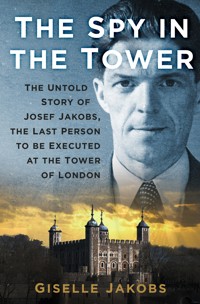
A family man who ran afoul of the Nazis, Josef Jakobs was ill-prepared for an espionage mission to England. Captured by the Home Guard after breaking his ankle, Josef was interrogated at Camp 020, before being prosecuted under the Treachery Act 1940 and executed on 15 August 1941. An open and shut case? MI5's files suggest otherwise. Faced with the threat of a German invasion in 1940/41, MI5 used promises and threats to break enemy agents, extract intelligence and turn some into double agents, challenging the validity of the 'voluntary' confessions used to prosecute captured spies. But, more than that – was Josef set up to fail? Was he a sacrifice to test the double-cross system? The Spy in the Tower tells the untold story of one of Nazi Germany's failed agents, and calls into question the legitimacy of Britain's wartime espionage trials and the success of its double-cross system.
Sie lesen das E-Book in den Legimi-Apps auf:
Seitenzahl: 826
Veröffentlichungsjahr: 2019
Das E-Book (TTS) können Sie hören im Abo „Legimi Premium” in Legimi-Apps auf:
Ähnliche


















For my Dad, Raymond, who never knew what happened to his father. Until now.
Cover illustration: Josef Jakobs in April 1940. (Jakobs family archives)
First published 2019
This paperback edition first published 2024
The History Press
97 St George’s Place, Cheltenham,
Gloucestershire, GL50 3QB
www.thehistorypress.co.uk
© Giselle K. Jakobs, 2019, 2024
The right of Giselle K. Jakobs to be identified as the Author of this work has been asserted in accordance with the Copyright, Designs and Patents Act 1988.
All rights reserved. No part of this book may be reprinted or reproduced or utilised in any form or by any electronic, mechanical or other means, now known or hereafter invented, including photocopying and recording, or in any information storage or retrieval system, without the permission in writing from the Publishers.
British Library Cataloguing in Publication Data.
A catalogue record for this book is available from the British Library.
ISBN 978 0 75099 171 1
eBook converted by Geethik Technologies
Typesetting and origination by The History Press
Printed and bound in Great Britain by TJ Books Limited, Padstow, Cornwall
CONTENTS
Author’s Note
Abbreviations
Acknowledgements
Dramatis Personae
Foreword by Nigel West
1 Broken from the Vivid Thread of Life
2 Skeletons in the Closet
3 Inauspicious Beginnings
4 Dentist and Family Man
5 Desperate Times Call for Desperate Measures
6 A Different World
7 A Jew Escapes to Albion
8 A New World
9 Soldier or Spy
10 A Leap into the Unknown
11 Spy Catchers
12 An English Gaol
13 Preparations to Receive a Spy
14 Abandon Hope All Ye Who Enter
15 Medical Respite
16 The Cost of Loose Lips and Tittle-Tattle
17 Clandestine Communication
18 A New Identity
19 Dressing the Part
20 An Unsavoury Name
21 Once More Unto the Breach
22 Oh, What a Tangled Web
23 Stubborn Czech
24 Treachery Act (1940)
25 Life or Death
26 Intelligence vs Prosecution
27 The Truth Will Out
28 Operation LENA: The Mission to Heaven
29 Actress, Singer, Mistress, Spy
30 Case for Liquidation
31 A False Sense of Security
32 First Espionage Court Martial
33 Charged with Treachery
34 Court Martial Begins: 4 August 1941
35 Case for the Prosecution
36 Case for the Defence
37 Court Martial Ends: 5 August 1941
38 Summary for the Prosecution
39 Summary for the Defence
40 Judge Advocate’s Summing Up
41 Verdict and Sentence
42 Ministering to a German Spy
43 A Plea for Mercy
44 Foolish Gunner Jackson
45 Preparations for an Execution
46 Tower of London
47 Dust to Dust
48 Hounds on the Trail
49 Czech in the Middle
50 The Road to a Successful Prosecution
51 Inducements, Threats and Promises
52 Rule of Law
53 Inefficient Germans
54 Caught in a Web
Epilogue
Appendix: Josef’s Personal Property
Notes
Bibliography
AUTHOR’S NOTE
I began this journey over thirty years ago, seeking to answer the question: ‘Who was my grandfather, Josef Jakobs?’ The answer has been a long time coming. He was a rogue and a scoundrel. He was brave and courageous. He was a dentist and a criminal. He was a husband and a philanderer. He was a complex individual whose motivations were not always clear.
I can say this: Josef Jakobs loved his family above all else. It is a tragedy that his final letter, written on the night before his execution, was only handed to his two granddaughters in 1993, fifty-five years after his death. On the other hand, I am grateful that we received the letter and were able to give it to our father, Josef’s youngest son. Thankfully, Josef’s letter did not meet the same fate as the letters of the other spies – released to the National Archives in the late 1990s with their declassified MI5 files.
The process of uncovering Josef’s story has involved many side excursions into the declassified files of the other spies sent to England by the German Abwehr. Sometimes, in genealogy, when one is stymied in a vertical direction, a breakthrough can happen by exploring laterally: siblings, aunts, uncles, etc. I experienced similar breakthroughs in researching Josef’s case.
I must admit to being fascinated by the stories of the characters I discovered during my research, and their relationship to Josef. Connecting with their children and grandchildren has been very enriching. Thank you.
ABBREVIATIONS
English
AAG
Assistant Attorney General
AB
Alberta – Canadian province
AG
Attorney General
B1a
British Security Service (MI5) B Division – the section concerned with the double-cross system and run by Major T.A. Robertson. Originally B2a but was renamed B1a in mid 1941.
B1b
British Security Service (MI5) B Division – the section that analysed Abwehr decrypts and other intelligence related to the double-cross system. Originally B2c but was renamed B1b in mid 1941.
B1c
British Security Service (MI5) B Division – the section concerned with counter-sabotage. Originally B18, it was renamed B1c in mid 1941.
B1e
British Security Service (MI5) B Division at Latchmere House (also known as Ham or, later, Camp 020). Originally BL or B8a, it was renamed B1e in mid 1941.
BAOR
British Army of the Rhine (after the Second World War)
BBC
British Broadcasting Corporation
BC
British Columbia – Canadian province
CAB
Cabinet Office records at the National Archives
CMP
Corps of Military Police
CRIM
Central Criminal Court records at the National Archives
CSDIC
Combined Services Detailed Interrogation Centre
CT
Continental time
DB
Director B Division, British Security Service (MI5)
DDB
Deputy Director B Division, British Security Service (MI5)
DDG
Deputy Director General, British Security Service (MI5)
DG
Director General, British Security Service (MI5)
DPM
Deputy Provost Marshal
DPP
Director of Public Prosecutions
DPS
Director of Personal Services
DR
Defence (General) Regulations 1939
GCCS
Government Code & Cipher School
GIS
German Intelligence Service (see also GSS)
GOC
General Officer Commanding
GPO
General Post Office
GSS
German Secret Service (German Abwehr – Abteilung I – Espionage) (see also GIS)
HO
Home Office records at the National Archives
J
Supreme Court Judicature records at the National Archives
JAG
Judge Advocate General
KV
Security Service records at the National Archives
LCO
Lord Chancellor’s records at the National Archives
LMA
London Metropolitan Archives
LRC
London Reception Centre (see also RVPS)
MEPO
Metropolitan Police records at the National Archives
MI5
Military Intelligence, Section 5 – British Security Service
MI6
Military Intelligence, Section 6 – British Secret Service or Secret Intelligence Service
Mk
Mark (German currency)
OSA
Official Secrets Act
PCOM
Prison Commission and Home Office records at the National Archives
POW
Prisoner of War
PREM
Prime Minister’s Office records at the National Archives
PWIB
Prisoner of War Information Bureau
RAF
Royal Air Force
RAOC
Royal Army Ordnance Corps
RG
General Register Office records at the National Archives
RM
Reichsmark (German currency)
RSLO
Regional Security Liaison Officer, British Security Service (MI5)
RSM
Regimental Sergeant Major
RSS
Radio Security Service (MI8c, transferred to MI6 in mid 1941)
RVPS
Royal Victoria Patriotic Schools (see also LRC)
SIS
British Secret Intelligence Service (MI6)
SLB
British Security Service (MI5) – legal section concerned with prosecution of spies. Originally B13, but was renamed SLB in mid 1941.
SOE
Special Operations Executive
SS
British Security Service (MI5)
TNA
The National Archives
WEA
Western European Area
WO
War Office records at the National Archives
WORK
Office of Works records at the National Archives
XX
British Double-Cross System
German
ABT
Abteilung – German Abwehr Section
Abteilung I
Section I – Espionage/intelligence
Abteilung II
Section II – Sabotage
Abteilung III
Section III – Counter-intelligence
Abwehr
Amtsgruppe Auslandsnachrichten und Abwehr – essentially the German armed forces’ Intelligence Service
AST
Abwehrstelle – Abwehr station in each military district within Germany
FHW
Fremde Heere West – Foreign Armies West – military intelligence under the Supreme High Command of the German army, received intelligence from the Abwehr
Gestapo
Geheime Staatspolizei (Secret State Police) under the RSHA
Nachrichtendienst
Intelligence Service – often used as a synonym for the Abwehr
OKW
Oberkommando der Wehrmachts – German Army High Command
Referat I
Luft subsection of Abteilung I concerned with gathering air intelligence
Referat I
Marine subsection of Abteilung I concerned with gathering naval intelligence
RSHA
Reichssicherheitshauptamt (Reich Main Security Office)
SD
Sicherheitsdienst des Reichsführers-SS (Security Service of the Reichsführers-SS) – intelligence agency of the SS (Schutzstaffel) and the Nazi Party in Nazi Germany – under the RSHA
SS
Schutzstaffel (paramilitary organisation of the Nazi Party)
X
Military District 10
ACKNOWLEDGEMENTS
I would not be sitting here today were it not for two men: Winston Ramsey (editor of After the Battle magazine) and Nigel West (well-known author and intelligence expert). They opened the door and revealed a treasure trove of information on my grandfather. Their support over the decades has been amazing.
I am indebted to a long list of the children and grandchildren of key characters in the Josef story. Thank you for sharing your stories with me: Sylvia Paskin (L. Knips), Kate Snell (W. Chidlow), Martyn Smith (H. Jaikens), Claire Robertson (H.C. Bäuerle), Richard Hall (W.E. Hinchley-Cooke), Adrian Birt (R.W.G. Stephens), Ted Watling (A. Watling), Martin Dearden (Dr H. Dearden), Pete Saul (H. Saul), Ramsey Hertzog (Dr W. Hertzog), Julia O’Grady (H. Coulson), Hannah Emmington-Thomas (C. Baldock), James Grew (B.D. Grew), Collinette (Gordon) Compton (C.V.T. Gordon), Melanie Veness (A. Haigh), Martha Fitzner (H. Fitzner), Guillermo Fitzner (H. Fitzner).
Special thanks to Kate Snell, Sylvia Paskin, Martyn Smith and Claire Robertson for graciously sharing photographs and allowing permission to publish them.
The National Archives provided the bulk of research material for this book. It was always a pleasure to visit the archives and dig into their files using their efficient system. All files in the National Archives are © Crown Copyright and are reproduced with permission under the terms of the Open Government Licence. Quotes from Hansard contain parliamentary information licensed under the Open Parliament Licence v3.0.
Other archives, museums, curators and researchers have also been most helpful: London Metropolitan Archives, Historic Royal Palaces, Royal Armouries (Bridget Clifford), HM Prison Wandsworth (Stewart McLaughlin), Guards Museum (Andrew Wallis), Guards Archives (Leighton Platt), Ramsey Rural Museum (Martin Lovell), RHQ Royal Military Police (Richard Callaghan), Museum of Army Chaplaincy (David Blake), St Mary’s Roman Catholic Cemetery, Kensal Green (Anna Humphrey), Military Provost Staff Association (Lester Pearse), King’s College London (Joe Maiolo), Military Intelligence Museum (Alan Fred Judge) and Military Wireless Museum (Ben Nock).
Thanks are also extended to the following for their assistance in diverse ways: Mrs Enid Smith (Lord Chancellor’s Office), Alan Fiddes (former Yeoman Warder, Tower of London), Jacqui Farnham (BBC), Father Rupert McHardy (Brompton Oratory), Nick Hinton (Gurkha Regiment), Traugott Vitz (author), Chris Bilham (author), Eckhard Froeb (Notar), A. Cebrian (pharmacist) and Stewart Jackson (Dovehouse Farm).
I am deeply grateful to Tony Kemp, Dr Paul L. Smith, David Auton, Rose M. Palfy and Lori J. McGinlay for reading various iterations of the manuscript. The feedback was always helpful and has guided me on this journey.
Many thanks to David Tremain (author) for breaking trail on the publishing front and answering my many questions. Your tips, advice and encouragement are much appreciated.
I would be remiss if I did not also acknowledge Starbucks®️ for providing me with writing space and wireless access.
Finally, this book would not have been possible without the staunch support of my family: Anne Taylor, Raymond Jakobs, Pamela Jakobs and Hildegard Jakobs. You believed, even when I sometimes lost hope, focus and umph!
DRAMATIS PERSONAE
Anderson, John
Secretary of State for the Home Department and Lord President of the Privy Council.
Baldock, Charles
Farm labourer who found Josef Jakobs near Ramsey, Huntingdonshire.
Bäuerle, Hedwig Clara
German cabaret singer and actress – mistress of Josef Jakobs.
Beier, Dr
Alias for Julius Jacob Boeckel.
BISCUIT
MI5 double agent, Sam McCarthy.
Boeckel, Julius Jacob
German Abwehr – Ast Hamburg – trained LENA agents – alias Dr Beier.
Brodersen, Knut
Norwegian – Abwehr agent, arrived in Scotland in early 1944.
Butler, Richard
MI5, SLB – involved in prosecution of spies.
Canaris, Wilhelm
Head of German Abwehr.
Caroli, Gösta
Swedish – Abwehr agent sent to England in September 1940 – double agent SUMMER.
Chidlow, William
Corps of Military Police – guarded Josef Jakobs from 23 July to 15 August.
Cornish, George Mervyn
Officer Commanding, Holding Battalion, Grenadier Guards.
Coulson, Harry
Farm labourer who found Josef Jakobs near Ramsey, Huntingdonshire.
Cowgill, Felix
MI6, Deputy Head of Section V.
Curedale, John
Ramsey Home Guard – involved in apprehension of Josef Jakobs.
Cussen, Edward James Patrick
MI5, SLB – involved in prosecution of spies.
De Deeker, Franciscus
Belgian – alias of Karl Theodore Druecke.
Dearden, Harold
MI5 – physician at Latchmere House.
DeGraaf, Johannes
Dutch-Canadian – Abwehr agent, arrived in England in late 1942.
Dierks, Hans
German Abwehr – Ast Hamburg.
Dixon, Cyril E.
MI5 – Regional Security Liaison Officer (RSLO) in Cambridge.
Dronkers, Johannes Marinus
Dutch – Abwehr agent, arrived in England in May 1942.
Druecke, Karl Theodore
German? – Abwehr agent, arrived in Scotland in September 1940.
Elkan, Abraham Wolfgang
German-Jewish stepfather of Josef Jakobs’ wife.
Eriksen, Vera
Danish-Russian – alias of Vera von Wedel or Vera Schalburg, Abwehr agent who arrived in Scotland in September 1940.
Evans, Albert Daniel Meurig
MI5 – Latchmere House interrogator.
Frischmuth, Inspector
Alias for Walter Steffens.
Gerard, Charles Robert Tolver Michael
Deputy Provost Marshal, London District.
GANDER
MI5 double agent Kurt Karl Goose, aka Hans Reysen.
Glad, Tor
Norwegian – double agent JEFF.
Godfrey, James Harry
Ramsey Home Guard – involved in apprehension of Josef Jakobs near Ramsey, Huntingdonshire.
Goodacre, Edward Brereton
MI5 – Latchmere House interrogator.
Goose, Kurt Karl
German – aka Hans Reysen – double agent GANDER.
Grant, Douglas
Metropolitan Police, Special Branch.
Grew, Benjamin Dixon
HM Prison Wandsworth – Governor.
Hansen, Nikolai S.M.
Norwegian – Abwehr agent arrived in Scotland in September 1943.
Harker, Oswald Allen
Deputy Director General, MI5.
Heddy, William Reginald Huleatt
Coroner, East London District.
Hinchley-Cooke, william Edward
MI5, SLB – co-ordinated prosecution of spies.
Hippisley-Cox, Edward Geoffrey
Assistant Adjutant General, London District.
Jackson, Philip
Gunner with the Royal Artillery.
Jaikens, Horace
Huntingdonshire Constabulary, Ramsey Police – acting inspector.
Jakobs, Emma (née Lück)
Mother of Josef Jakobs, wife of Kaspar Jakobs.
Jakobs, Giselle
Daughter of Raymond Jakobs and granddaughter of Josef Jakobs.
Jakobs, Josef
German Abwehr agent.
Jakobs, Kaspar
Father of Josef Jakobs, former Catholic priest.
Jakobs, Margarete (née Knöffler)
Wife of Josef Jakobs.
Jakobs, Norbert
Eldest son of Josef Jakobs.
Jakobs, Pamela
Daughter of Raymond Jakobs and granddaughter of Josef Jakobs.
Jakobs, Raymond
Youngest son of Josef Jakobs.
Jakobs, Regine
Daughter of Josef Jakobs.
JEFF
MI5 double agent, Tor Glad.
JOHNNY
German Abwehr’s code name for Arthur G. Owens (double agent SNOW to the British).
JULIUS
German Abwehr’s code name for Josef Jakobs.
Kieboom, Charles Albert Van den
Dutch – one of the four spies who landed on the coast of Kent in September 1940.
Knips, Lily
German-Jewish – escaped from Berlin to London.
Knöffler, Alma Margarete
Wife of Josef Jakobs.
Lahousen, Erwin von
Head of Abteilung II, German Abwehr.
LEONHARDT
German Abwehr’s code name for Wulf Schmidt (double agent TATE to the British).
Liddell, Guy
Director, MI5 B Division.
Lück, Emma
Wife of Kaspar Jakobs and mother of Josef Jakobs.
MacGeagh, Henry Davies Foster
Judge Advocate General.
Mackenzie, Eric Dighton
Officer Commanding, Holding Battalion, Scots Guards.
Malten, Major
Alias of Carl August Johannes Merker/Merkel.
Margesson, David
Secretary of State for War.
Marlowe, Anthony Alfred Harmsworth
Lawyer for the prosecution at court martial of Josef Jakobs.
Marriott, John H.
MI5 – Secretary, Double-Cross Committee.
Masterman, John Cecil
MI5 – Chairman, Double-Cross Committee.
Maxwell, Alexander
Permanent Undersecretary of State, Home Office.
McCarthy, Sam
British – MI5 double agent BISCUIT.
Meier, Carl
Dutch-German – one of the four spies who landed on the coast of Kent in September 1940.
Merker/Merkel,
German Abwehr - Ast Netherlands -
Carl August Johannes
Referat I Luft - responsible for dispatching agents by air (alias Major Malten)
Mills, Thomas Oliver
Huntingdonshire Constabulary.
Milmo, Helenus Padraic Seosamh
MI5, Head of B1b – section that analysed Abwehr decrypts and other intelligence related to the double-cross system.
Moe, John Herbert Neal (Helge)
Norwegian-British – double agent MUTT.
MUTT
MI5 double agent, John Moe.
Neukermans, Pierre Richard Charles
Belgian – Abwehr agent, arrived in England in July 1943.
Newton, William Henry
Officer Commanding Ramsey Home Guard – involved in apprehension of Josef Jakobs.
O’Grady, Dorothy Pamela
British housewife on the Isle of Wight charged under the Treachery Act.
Owens, Arthur Graham
Welsh – double agent (SNOW to to the British and JOHNNY to the Germans)
Petrie, David
MI5, Director General.
Petter, Robert
possible real name of Werner Heinrich Walti.
Pons, Sjoerd
Swedish – one of the four spies who landed on the coast of Kent in September 1940.
Popov, Dusko
Yugoslavian – MI5 double agent TRICYCLE.
Pottle, Ernest
Ramsey Police – acting sergeant stationed in Bury.
Praetorius, Friedrich Karl
German Abwehr – Ast Hamburg.
Purchase, William Bentley
Coroner, North London District.
Rammrath, Egon
German – involved in black-market passport business with Josef Jakobs.
Rantzau, Dr
Alias for Nikolaus Ritter.
Reiwald, Herr and Frau
German Jews – Herr Reiwald was a former patient of Josef Jakobs and introduced him to Rammrath. Frau Reiwald introduced Lily Knips to Josef Jakobs.
Reysen, Hans
German – aka Kurt Karl Goose – double agent GANDER
Richter, Karel
Sudeten Czech – Abwehr sent to England May 1941.
Ritter, Nikolaus
German Abwehr – Ast Hamburg – alias Dr Rantzau.
Roberts, Owen
Dulwich Hospital physician in charge of care of Josef Jakobs.
Robertson, Thomas Argyll
MI5 – head of B1a, double-cross system.
ROBOTER
German Abwehr’s code name for Karel Richter.
Rothschild, Victor
MI5 – head of B1c, counter-sabotage.
Rowe, Harold A.
Pharmacist who filled prescriptions for Rudolf Hess and Josef Jakobs.
Ryde, Michael
MI5 – Regional Security Liaison Officer (RSLO) in Reading.
Rymer, James
Alias for Josef Jakobs on his forged British National Identity Card.
Sampson, George Frederick
MI5 – Latchmere House interrogator.
Sauer, Lothar
German–Jewish – son of Lily Knips.
Saul, Henry
Corps of Military Police – guarded Josef Jakobs from 23 July to 15 August.
Schmidt, Wulf
Danish – double agent TATE.
Scholz
German Abwehr – alias of an officer from the Abwehr’s Hamburg office.
Sergison-Brooke, Bertram Norman
General Officer Commanding, British Army – London District.
Sessler, George
German Abwehr – Ast Hamburg.
Short, Roland Alfred Frederick
MI5 – Latchmere House interrogator.
Sinclair
Alias for George Sessler.
Sinclair, D.H.
MI5, SLB – involved in prosecution of spies.
SNOW
MI5 double agent, Arthur Graham Owens.
Somervell, Donald Bradley
Attorney General.
Spilsbury, Bernard
Pathologist.
Steffens, Walter
German Abwehr – Bremen – alias Inspector Frischmuth.
Steiner, Florent
Dutch-Belgian – Abwehr agent, arrived in England in June 1941,
Stephens, Robin William George
MI5 – Latchmere House commandant and interrogator.
Stimson, Douglas Bernard
MI5 – Latchmere House administrator.
Stirling, Carl Ludwig
Deputy Judge Advocate General – served as Judge Advocate at court martial of Josef Jakobs.
SUMMER
MI5 double agent Gösta Caroli.
Swinton, Philip Cuncliffe-Lister
Chairman of the Home Defence (Security) Executive.
TATE
MI5 double agent Wulf Schmidt.
Taylor, R.W.
Medical officer at the Tower of London.
Timmerman, Alphons Louis Eugene
Belgian – Abwehr agent, arrived in Scotland in September 1941.
Tindal Atkinson, Edward Hale
Director of Public Prosecutions.
TRICYCLE
MI5 double agent Dusko Popov.
Van Hees
German – friend of Josef Jakobs.
Vivian, Sylvanus
Registrar General.
Waldberg, Jose
French? – one of the four spies who landed on the coast of Kent in September 1940 (in his appeal, he claimed that he was French and that his real name was Henri Lassudry).
Walti, Werner Heinrich
Swiss – aka Robert Petter – Abwehr agent, arrived in Scotland in September 1940.
Waters, Philip Duncan Joseph
Scots Guards (Holding Battalion) – officer in charge of execution of Josef Jakobs.
Watling, Alfred
Corps of Military Police – guarded Josef Jakobs from 23 July to 15 August.
White, Dick Goldsmith
Deputy Director, MI5 B Division.
White, Eric Vincent Ewart
Lawyer for the defence at court martial of Josef Jakobs.
Wichmann, Herbert
German Abwehr – Head of Ast Hamburg.
Wilford, Arthur
Scots Guards (Holding Battalion) – RSM in charge of execution.
Winn, Thomas Leith
MI5 – Latchmere House officer.
Winter, Franciscus Johannes
Belgian – Abwehr agent, arrived in Scotland in July 1942.
Ziebell, Jürgen
German lawyer involved in black-market passport business with Josef Jakobs.
FOREWORDBY NIGEL WEST
In 1992, Prime Minister John Major appointed William Waldegrave, then Secretary of State for Health, as Chancellor of the Duchy of Lancaster; a Cabinet post without any specific portfolio. His assignment was to concentrate on science and ways of improving Whitehall administration. High on his list of goals was the Open Government policy, which was intended to reflect the conditions of the post-Cold War era when the United States was basking in what was then termed the ‘peace dividend’. The Soviet bloc had collapsed, Russia had outlawed the Communist Party and Congress had embraced the principles of freedom of information.
In Great Britain, where Whitehall secrecy was an accepted part of the fabric of society, along with an unwritten constitution and the ubiquitous royal prerogative, any proposition to alter the thirty-year rule relating to the public disclosure of a limited class of government documents was regarded as iconoclastic and potentially dangerous. Nevertheless, the Waldegrave initiative took the opportunity to canvass all government departments in an effort to identify papers that could be safely declassified.
A surprising participant in this exercise was the Security Service, headed from October 1996 by Stephen Lander, a Cambridge history graduate who had joined the organization in 1975 from a history fellowship at Liverpool University. Although other branches of the British Intelligence community recoiled instinctively from the Open Government review, Lander, the director of H Branch (the relatively new corporate affairs division), embraced the concept and advocated greater engagement with the public. As a former director of T Branch, the counter-terrorism unit responsible for coordinating the defeat of the Provisional IRA, Lander’s views were widely respected and held great weight. By the end of the decade, some 96,000 Whitehall files had been reviewed and released in an unprecedented process of declassification, a new work in the lexicon of Whitehall mandarins.
This was the cultural breakthrough, accompanied by the Freedom of Information Act 2000, which came into force in 2005, that allowed researchers to lift the lid on thousands of investigations conducted by the Security Service over the previous hundred years. Initially, MI5 lodged pre-war files, and then ventured into the archive of Second World War cases that might otherwise have been subjected to the time-honoured ‘weeding’ procedure and, most likely, been destroyed.
Happily, it has been this extraordinary reversal of political and administrative attitudes in Britain that has facilitated researchers such as Giselle Jakobs to search for her family’s history and reconstruct the poignant story of her grandfather’s role as an Abwehr spy, dispatched by a Luftwaffe parachute on a futile espionage mission to collect intelligence and, perhaps more importantly, to check up on Wulf Schmidt, a suspected double agent. At stake was the credibility of the now-celebrated Double Cross System, a sophisticated deception programme that was supervised by skilled MI5 case officers who sought to manipulate – and ultimately control – all the enemy’s active spies.
If Josef Jakobs had succeeded in his mission, and confirmed what Schmidt’s Hamburg controllers had already guessed, several other linked networks would have been compromised, thereby jeopardising the entire scheme. It is only now, with the benefit of access to the original MI5 dossier on Jakobs, that we can fully grasp the ironies and tragedy of how an unassuming Luxembourg-born dentist came to land to Huntingdonshire in 1941, to ultimately find himself facing a firing squad in the Tower of London.
Nigel West
Spring 2019
www.nigelwest.com
1
BROKEN FROM THE VIVID THREAD OF LIFE1
Josef leaned on his crutch at the window overlooking the concrete courtyard of Wandsworth Prison.2 As the setting sun disappeared behind the rooftops, it set fire to the clouds overhead. He watched the sun gild the hairs on the back of his hand. He clenched his fist and tried to capture the light in his grasp. It was impossible, but his skin soaked up the sun’s rays nevertheless. He marvelled at the miracle of life – the ability to clench his fist and to open it, to feel each finger connected to the others through muscles, tendons and bones. The sunlight slipped from his hand and was gone. The light could not be captured and now the gathering darkness of night loomed before him. The sun had disappeared behind the buildings, but the gleam of its light lingered in the heavens, colouring the clouds an unearthly shade of orange and red. It was the last time he would witness a sunset.
The day had been filled with many last things – his last midday meal, his last supper, his last sunset, his last full day of life. He stared at his watch as it ticked away the seconds with unwavering precision. He could do nothing to stop time. He could only savour the small joys in each moment – swallows in flight, pink clouds in the sky, laughter that drifted over the prison walls. Too soon, it would all be gone.
The day of last things was coming to a close, but he had one last thing to do, something that he had prayed would not be necessary. He had hoped that a reprieve would arrive at the eleventh hour. There was none. The desk and chair in the corner of the cell waited for him. The paper and pen waited for him. He ignored their call, his eyes fixed on the view from the window. The gathering gloom dulled the colours outside. The glow from the departed sun had died. There was only twilight, that time when the world was caught between day and night, caught between light and dark, caught between life and death. He knew that place of twilight well, having lived in it for the previous eight months. As the light of day slipped towards the darkness of night, he knew that he needed to turn from life and face death.
One of his guards moved towards the window to draw the blackout curtains while the other stood ready to turn on the cell’s lights. Josef asked for more time, just a bit more time. The guards glanced at each other and nodded their agreement. Silence settled over the room. Josef was alone with his thoughts.
The sky had darkened, and the first stars appeared, dotting the sky with points of light. He had gazed at these stars for months, his constant companions in this strange land. The stars appeared night after night and he knew that those same stars watched over his family almost 600 miles to the east. They had seen the same stars. They had seen the same sunset. The night sky was his connection to his wife and children. He wondered if they had gazed up at the stars and prayed for his safety. He had certainly prayed for theirs and he believed, with heartfelt conviction, that they were safe.
To the east, the horizon lightened slightly as the waning moon crept above the London skyline. Gazing at its scarred visage, he felt its connection with the departed sun. Even though the sun was gone, the lunar surface reflected the departed sun’s light back at Josef, offering reassurance and hope. Soon enough, he too would be gone; his light would set and that would be the end. Or so it would seem. The moon told him differently. He believed with all his being that, even though the light of his spirit might disappear from the world, he would continue for eternity.
The wind shifted slightly and carried the faint tolling of Big Ben. He cocked his head, listened intently and counted the tolls. Another day had ended and a new one was in its infancy, scarcely a few seconds old. It was Friday, 15 August 1941, the Feast of the Assumption of Mary into Heaven or Maria Himmelfahrt in German. It was the last day of his life. It was his Good Friday. Today was the day of his suffering, his death and, he prayed, his entry into heaven. The hours slipped away so quickly and soon enough he would have to leave this place.
The changing of the day also signified the changing of his guard. With murmured apologies, one guard drew the blackout curtains. When they were tightly closed, the other guard turned on the lights. A knock at the door heralded the entrance of the new guards.
Josef was relieved. He knew these two well – Chidlow and Saul. There was a flurry of activity as the departing guards gathered up their kit, shook Josef’s hand and left the cell. Josef chatted briefly with Chidlow and Saul.3 They asked him if he had written his letter and he shook his head. The two men offered him encouragement and then sat at a small table and gathered up a deck of cards. A quiet game of whist was in order. In the distance, Big Ben tolled a lone note. Josef sighed. It was time.
The wooden chair was hard. The desk was scarred and stained. He stared at the creamy blank sheets of paper embossed with the royal coat of arms. Squinting in the dim light, he could just make out the inscription beneath the rampant lion and unicorn: Dieu et mon droit. An ironic chuckle escaped him as his fingers caressed the coat of arms.
The inscription translated as ‘God and my right’. The British monarch had exercised his right and denied Josef’s request for mercy. For Josef, there was no way out; earthly judgement had been passed but it was not the only one he would endure. There was the eternal judgement and he knew that God would be his ultimate defender. He had done what he had to do, to the best of his ability, and he trusted God to take care of the rest; to take care of his family. Big Ben tolled twice … the hours passed so quickly.
He stared at the paper, blank and inviting, waiting for him to write the words of his heart on its surface. He picked up the pen, uncapped it, and began to write:
London, the 15th August 1941
On the Holy Feast of the Assumption of Mary
My dear, dear wife,
When you, my much beloved Gretchen, receive this letter, I will already be standing before the eternal Judge! For today is my last night on this earth, on the Sacred Feast of the Assumption of Mary, I hope to be well prepared to take the journey to eternity. In just 5 hours, I will be shot at the Tower of London, after I was brought before an English War Tribunal on August 5 on charges of espionage and condemned to death. I want to quickly tell you, how it came to that … 4
He lifted the pen and looked up at the window. How could words written with pen and paper convey what was in his heart? Words were too fragile to carry the weight of his love; too weak to carry the depth of his compassion. He wished that he could speak to his loved ones. He wished that he had said more on that last night in Berlin. He wished that he had known how it would end. Had he known, he would have said it all. He would have said it many times, said it over and over again. Life would have been different; but there were no second chances in the game he had played. There was only a prison cell, a window, a desk, a chair, a pen and sheets of paper.
After a fitful start, the pen moved smoothly, and the words flowed effortlessly from its tip. He knew he had less than an hour for, at 3 a.m., Father Griffith would come to celebrate the last rites with him. His last confession. His last anointing. His last Holy Communion.
He sat back and put the pen down. He had said all that he could say using pen and paper. He was grateful that he would at least get a chance to say farewell to his family in the sure knowledge that the letter would eventually reach them.5
There was a knock at the door and Father Griffith entered the cell. Josef was grateful to this priest who had visited him every day since the court martial. He had listened to Josef, consoled him, guided his soul through the long days and prepared him for the final moment.
The guards stepped out of the room while Griffith prepared the small table by placing a white cloth on it. He reverently removed the Blessed Sacrament from his case and laid it on the table. Pulling a crucifix out of his bag, he gave it to Josef, who kissed it and placed it on the table. Josef bowed his head and uttered his last confession, receiving absolution with a sigh of relief. Josef closed his eyes while Griffith anointed his eyes, ears, nostrils, lips, hands and feet with the Oil of the Sick. Murmuring in Latin, Griffith recited the time-honoured phrase for extreme unction (last rites): ‘By this holy anointing and by His most tender mercy may the Lord forgive you all the evil you have done through the power of … (sight, hearing, smell, taste and speech, touch, ability to walk).’6
The Latin responses flowed from Josef’s lips with ease and a grateful heart. It was the last time he would speak those words. The last time he would hear the Word of God. It comforted him in a way that it had not always comforted him. For many years he had been a lukewarm Catholic, living a life that was less than ideal. The trials and tribulations of the last few months, however, had sent him running back to the bosom of Mother Church, seeking solace and forgiveness. He had found it. Josef opened his mouth to receive Holy Communion. A last murmured prayer and the rituals were complete.
Big Ben tolled four times. Time had grown exceedingly short. Josef had written to his family. He had worshipped his God. He sat now with his friends – the priest and the guards. He had only known these men for a short time and yet they had become true friends. He had laughed with them, played games with them. He had told stories about his wife and children and heard stories about their families. Although they were enemies, they were soldiers, and their stories were more alike than different. Even to these men, however, whom he counted as dear friends, he had not shared his last secret. As he pulled on his jacket, his fingers found the spot along the bottom seam and he smiled to himself. The British had searched him on numerous occasions, had interrogated him for seven and a half months, and yet they had never found the tiny reminders of home. Two small photographs gave him comfort and strength to face the next few hours. His family would be with him in his final hour. They might not know it, but he knew it, and that was enough.
It was almost time. He limped to the mirror on the wall and combed his hair. He stared into the eyes that gazed back at him. He saw a lifetime of memories reflected there. A lifetime of joy and regrets. Soon those eyes would lose their light and the mouth its smile.
He turned from the mirror as another knock at the door heralded the arrival of Lieutenant Colonel Hinchley-Cooke, Cussen, Sergeant Watling and the Deputy Provost Marshal. Josef handed his letter to Hinchley-Cooke, who assured him that it would be delivered to his family at the end of the war. It was time to empty his pockets. He had no need for the comb, the lighter, or the handkerchiefs. He laid them all out on the desk for Cussen to gather up.
With one last glance around the room, Josef picked up his crutches and limped out of the door. His guards were a mere formality, for he could not have run from them even had he desired. The clicking of their heels echoed in the vaulted rotunda that formed the heart of the prison.
Josef paused at the top of the narrow spiral staircase and carefully set his foot on the first tread. Stairs were still an obstacle for him, but one that was not insurmountable. The procession paused as Josef methodically stepped down the stairs. Once again on level ground, the group picked up their pace and turned down one of the corridors radiating off of the rotunda. Ahead, a light shone from an office where Prison Governor Grew stood silhouetted in the doorway. The governor watched as the party approached him. Stepping to the side, Josef walked up to Grew, extended his hand and shook it. Josef thanked him for his courteous hospitality, clicked his heels and continued his journey.7 The governor trailed behind the group as they exited the building and walked down the stairs into the forecourt where a pair of black cars with motorcycle outriders awaited them.8
The sky was shading slowly from black to grey. The sounds of London traffic drifted over the prison walls. Josef took a deep breath, and another. He savoured the beauty of breath, a thing he had once taken for granted but that had become an elixir to him. Tucked into one of the vehicles with Chidlow and Saul flanking him, Josef watched as the massive gates creaked open. His last journey had begun.
As the gates shut and cut off the view of the departing cavalcade, Hinchley-Cooke and Cussen took their leave of Grew, thanking him for his work. Years later, Grew would write, ‘Of all the spies who faced execution I shall remember one [Josef Jakobs] for his soldierly manner, his courtesy and his quiet courage.’9 Having watched Josef depart, Grew wrote, ‘I remember I felt disinclined to return immediately to my office, and walked on for a short way still thinking of that firm handshake and the fast approaching end of a brave soldier.’10
Josef, the brave soldier, sat between Chidlow and Saul as the car wove through the streets of London. It was good to see the trees, to watch people going about their business. Soon enough, they passed over Tower Bridge and Josef saw the famous silhouette of the Tower of London, his final stop. He turned to Chidlow and offered him his reading glasses. He had no need of them anymore. It was small thanks for the many kindnesses shown to him by this military policeman, and Chidlow accepted them in the spirit with which they were offered.11
The car pulled up at the massive gates of the Tower and, after a brief consultation with the guard, the gates creaked open. A short drive, another guard, another gate. A sharp turn to the right and they were within the Tower. Josef and his entourage climbed out of the vehicles. Josef looked up at the massive walls that surrounded him on all sides. The first rays of the sun struck fire into the stones of the Tower. It was his last sunrise.
His guards escorted him into a room where he eased himself onto a chair with relief. Walking was painful and, even with his crutches, drained him of energy. An officer approached him with a medical bag clutched in his fist. Did Josef need anything to calm the nerves? Josef shook his head with a smile and sat in a bubble of peace as the others bustled around. He could hear the tramp of feet and the low murmur of voices outside. The firing squad was getting ready and so must he. A quick prayer, a caress of the photographs tucked in the seams of his coat.
His heart began to beat more quickly. Perhaps a sedative would be a good idea. The medical officer was summoned, and Josef swallowed the pill that was offered to him.12 He thanked the officer and squared his shoulders. It was time.
A soldier opened the door. The end was coming. Josef stood and limped outside, accompanied by the priest and his guards. With halting steps, Josef navigated the cobblestones and stopped before a low wooden shed. He took one last look around him. The squad of soldiers stood nearby, waiting for him. There were eight of them. They looked very young. He turned his gaze upwards and stared at the sun. His parents had always told him not to look directly at the sun, that he would ruin his eyes, but now it mattered not at all. He looked and felt the full blast of the light in his eyes. Blinking back the tears, he allowed Chidlow and Saul to lead him into the dark interior of the shed.
A table with eight rifles was positioned across the width of the room near the doorway. A chair sat at the far end, tied to a wooden beam. A major appeared and led Josef and his entourage to the chair. With a nod from the major, the guards took the rope and tied Josef securely to the chair. A black mask was produced by the medical officer and Josef asked that he be allowed to face what was to come, but his request was denied.
The mask descended over his head and the light was gone. The priest murmured a last prayer and Josef felt his fingers make the sign of the cross on his forehead. He felt fumbling at his jacket as a target was pinned to his chest. Robbed of sight, Josef listened intently to the departing footsteps. A pause, and then the tramp of feet. The firing squad was getting into position. Silence surrounded Josef and then he heard the quiet click of eight safety catches being released. With a smile beneath his mask, Josef took one last breath and called out, ‘Shoot straight, Tommies!’
They did not disappoint him. As the word ‘Fire!’ was shouted, a volley of bullets smashed into his chest.
2
SKELETONS IN THE CLOSET
I never knew my grandfather, Josef Jakobs. He died during the Second World War, decades before I was born. This is not unusual. Many people have fathers and grandfathers who died during the war. For many years I asked no questions about my paternal grandfather, in part, due to my father’s own reticence. My father never spoke about his family, possibly because the last member died in 1971. He was the only survivor of the Jakobs family. There were no siblings, no cousins, no aunts or uncles. My father had left Germany in 1955 focused on creating a future in Canada, not bemoaning the past in Germany.
By my late teens, however, I had developed an interest in genealogy. I wanted to learn more about my German roots. One day, as my mother and I were sorting old family photographs, I asked her about my grandfather, Josef Jakobs. She told me that she didn’t know all that much about him. She pulled a tattered orange paperback off my father’s bookshelf – Game of the Foxes by Ladislas Farago. She flipped through the pages of the book, found a dog-eared page and pointed to one line, which read, ‘Two of the seventeen spies sent to Britain in 1941 were tried in camera and paid the supreme forfeit. One was Josef Jakobs, a 43-year-old meteorologist from Luxembourg.’1 That line sparked a decades-long quest to discover the truth about my grandfather, the spy.
In the mid 1980s, I went to Vancouver (BC) to study at the University of British Columbia. In the pre-internet era, finding information on a German spy, who had parachuted into England, in a Canadian library proved to be a challenge. With Ladislas Farago as a beacon, I found two key resources: Nigel West’s book on the British Security Service, MI5: British Security Operations 1909–1945 (1982)2, and Winston Ramsey’s magazine article ‘German Spies in Britain’ in After the Battle.3 Both resources gave me enough information to confirm that my grandfather, Josef Jakobs, was indeed the German spy who had landed in Huntingdonshire on 31 January 1941 and was executed at the Tower of London on 15 August 1941. I also learned that Josef’s court martial had taken place in camera, which meant that the file would not be released until 2041. I had visions of myself as a septuagenarian, travelling to London to track down information on my grandfather.
In 1990, I contacted After the Battle magazine, and in September 1991 travelled to London to meet the magazine’s editor, Winston Ramsey. He had generously arranged to take me on a private tour of many of the sites associated with Josef’s time in England: the wartime interrogation centre at Latchmere House, the Duke of York’s headquarters where the court martial had taken place, the Tower of London where Josef had been executed and finally, St Mary’s Roman Catholic Cemetery in Kensal Green where Josef was laid to rest in an unmarked grave. During our visit to the Tower of London, I met the author Nigel West, who was also a Member of Parliament.4 Nigel said that secrecy around wartime affairs was easing and the government was planning to release declassified material to the National Archives. He asked me what our family thought about releasing the file on Josef Jakobs. If we had no objections, then perhaps my father could write a letter to Nigel giving our approval. I thought it was a splendid idea.
When I returned to Canada, I drafted a letter and sent it to my father to sign. I should mention that my parents had just gone through an acrimonious divorce. My father was living in Edmonton (AB), my sister and I were attending university in Vancouver and my mother was holding down the fort at home. Divorces often end up with one party being vilified and, in this case, it was my father. I went through a period where I wanted very little to do with him and this happened just as I was starting to delve more deeply into my grandfather’s past.
I was like a bloodhound on the scent of a great discovery. The quest for more information on Josef satisfied the researcher within me. The more information I found, the more information I sought. It would take a few years but eventually my wishes would be fulfilled.
Our letter to Nigel West wound its way through a bureaucratic maze and in 1993 we received word that the court martial file was going to be released to the National Archives. As fortune would have it, my sister and I were planning a trip to Europe in late August of that year. It didn’t take much to rearrange our trip to include a visit to London.
On 14 September 1993, my sister and I visited the Lord Chancellor’s Office in Trevelyan House, Great Saint Peter Street, London. We were greeted by Mrs E. Smith, who seated us at a small table and presented us with a photocopy of the court martial documents. She then brought out an envelope that had been found in another file. The envelope was addressed to our grandmother, Margarete Jakobs, 124 Rudolstädter Strasse in Berlin, and was to have been delivered at the end of the war. It contained the letter that Josef had written to his wife and family on the night before his execution.
We were stunned and received the letter with awe and disbelief. Mrs Smith told us that she had sent a letter in mid August letting us know about it but it had not reached us before our departure:
A number of people in other government departments here know that we have been in correspondence about this case. As a result, I have been asked to ensure that you receive the farewell letter written in 1941 by your grandfather addressed to Margaret [sic] Jakobs. This letter was intended for delivery after the cessation of hostilities but has only just come to light, and in view of the interest taken by both you and your father in Josef’s case, we should very much like you to have the letter now.
The letter will, I am sure, be of very special family significance, and for this reason I do not want to entrust it to the post. I should prefer to hand it to you personally when you are in London, and can either meet you at Kew or here in my office whichever suits you best.5
I would like to be able to say that my sister and I took the letter to the Tower of London, opened it there and read it in the place where Josef had been executed. While that might make for a good vignette in a movie, the truth is more pedestrian. My sister and I only opened the letter once we were back in Canada and were immediately stymied. While my knowledge of German might have been enough to navigate a typewritten document, Josef’s handwriting was indecipherable.
A few weeks later, my mother came to Vancouver for a visit. We sat and listened while she read the letter out loud. We cried. This letter, written from my grandfather’s heart, to his mother, wife and children, had never reached them. They had died not knowing what had become of their son, husband or father. All except one. Josef’s youngest son, my father, was still alive.
After transcribing and photocopying Josef’s letter, I mailed the original to my father in Edmonton. He had been following my research with keen interest, and while I might be giving him the cold shoulder, he very much wanted a renewed relationship. Later, he told me that if Josef’s letter had been handed to him, he would have destroyed it without reading it.
That is, I suppose, the danger of delving into genealogy and family history. What begins as a quest for information, for names, dates, places and cold, hard facts, can sometimes end up unearthing something deeper and closer to the heart. Josef’s letter had a different impact on each of us. After listening to Josef speaking across the decades, my sister turned to me, put her hand on my arm and said, ‘You need to write his story.’ Me?
Who was I to write the story of my grandfather? I was a researcher and a scientist. I was comfortable in the realm of facts, less so in the realm of emotions, morals and motivations. I was a Canadian of German ancestry. I knew the history of Germany during the Second World War and it bothered me deeply that my grandfather was in any way associated with the Nazi regime. He was a German spy. Did that also mean he was a Nazi? I wasn’t sure that I wanted to know.
We had the court martial file, but I only glanced at it. What I saw frightened me. Josef testified at his court martial and, from my brief glimpse of the material, I could already see that he was not a sterling character. I wasn’t sure that I was ready to see my grandfather as anything other than a man of upstanding moral fibre. I had yet to learn that humans are complicated creatures, that good and bad can live within the same person, within the same spirit. So, I didn’t read the court martial document. I put it in a drawer and let it sit there; my quest for Josef was on hiatus.
In 2001, Josef would come knocking on my psyche again when his declassified interrogation file was released to the National Archives. I travelled to London in 2003 and examined the file. There was a vast amount of information contained within hundreds of pages: reports, interrogations, memos, photographs and X-rays. It was all there. I paid the National Archives the princely sum of £1 per page (£800 in total) to copy everything and send it to me in Canada. At one point in time, I had craved information, and now I was buried in it.
Through it all, however, Josef’s letter called to me. That, and the words of my sister – ‘You need to write his story.’ I shared the story of my grandfather with others and they told me the same thing.
Finally, in 2008, I picked up the gauntlet and began to write. Writing Josef’s story was not a smooth flow; it came in fits and starts. I had so much information, but I didn’t have enough historical context. Josef’s story took me down avenues I never would have dreamed of. It forced me to face skeletons rattling around in long-forgotten documents. It brought my father and I closer together. It was a joy. It was a struggle. How does one tell such a tale? How does one stay true to the historical facts, while still revealing the humanity that colours them? How does one move through the fear of what will be uncovered: that he was a German spy, and that he was involved in the persecution of the Jews?
I read many books about espionage during the Second World War. The books were thick with historical facts and technical details about spies, double agents, security services and counter-espionage. I did not wish to write such a book for it would be impenetrable to the average reader. Neither did I wish to write a book that was disconnected from history or from the facts of Josef’s life.
In the end, I came full circle. I decided to write this book for my father, who was only 9 years old when Josef disappeared. Early in my research, my father asked me, ‘Do you think Josef had a fair trial?’ At the time, I answered in the affirmative. How could it be otherwise? He had been tried by court martial in England, a land renowned for fair play and even-handed justice. It seemed pretty black and white. England and the Allies were the good guys; Nazi Germany and the Axis were the bad guys. Now, after years of research, my answer is far more nuanced.
There is no doubt that the Nazi regime was evil and committed despicable acts. At the same time, not every person, nor every group, within Germany was ‘Nazi’ or supported acts of evil. There is no doubt that the world is a better place thanks to the Allies emerging victorious at the end of the Second World War. At the same time, sacrifices had to be made, particularly in 1940 and 1941, when England was faced with the terrifying spectre of a German invasion. As one legal historian noted, ‘War is a rough business; you cannot make omelettes without breaking eggs.’6 Josef Jakobs was one of those broken eggs.
This book is not a technical espionage book. It is based on historical facts but necessarily includes inferences, deductions and educated guesswork. There are numerous books that provide the historical context to the times and circumstances surrounding espionage in the Second World War. They are a useful backdrop to the story of Josef and are referenced in the bibliography.
Before we get into Josef’s story, some background details will help the reader to situate themselves and become familiar with key players, although much will be explained as the story progresses. For the moment, it is enough to know that Josef’s life was sucked into a tug of war between two intelligence agencies.
In the autumn of 1940, Josef was recruited into the German Intelligence Service, commonly known as the Abwehr. The Abwehr was the intelligence arm of the German army and was not directly associated with the Nazi Party. In late January 1941, Josef parachuted into Huntingdonshire in England; his mission was to send weather reports back to Germany.
He was apprehended by the British Home Guard the next morning and handed over to the British Security Service, known as MI5 (Military Intelligence 5). MI5 was responsible for counter-intelligence within the borders of Great Britain and they interrogated Josef at length about his mission and his relationship with the Abwehr. Much of what is to come is based on the information gleaned from those interrogations, mixed in with family information and other research.
Josef was a complex individual, with character flaws, who also showed bravery in the face of brutal treatment and bad luck. He was caught in a web of deceit between the Abwehr and MI5. The Germans sacrificed Josef to the cause of misinforming the British by persuading them that invasion plans had not been shelved. This was done so ineffectively that, at the same time, it helped to undermine the Nazi regime. It will also become apparent that the British were intent on speeding up, if not perverting, the course of justice in order to make an example of Josef.
As with many historical events, the full truth about Josef Jakobs will never be known. Eyewitness accounts are necessarily filtered through the lens of the observer. The people involved are long dead. The records that survive are fragmentary. History is an imperfect science, but I hope that this story, incomplete though it may be, will shed light on the life and times of Josef Jakobs, the last person executed at the Tower of London.
3
INAUSPICIOUS BEGINNINGS
In 1862, in the ancient German city of Trier, a baby boy was born to linen weaver Franz and his wife Margarete.1 As the eldest son, much was expected of Kaspar, but rather than take over the family business when he came of age, Kaspar chose a different path. After several years of study, on 18 March 1893, Kaspar was ordained a Roman Catholic priest in the Diocese of Trier.2
With the Oil of Chrism still wet on his forehead, the Reverend Kaspar Jakobs was sent to St Ludwig Parish in Saarlouis-Roden to serve as assistant pastor.3 Just over a year later, in July 1894, Father Kaspar was abruptly transferred to Küs, a wine-making village nestled in the snug embrace of the Mosel River. Father Kaspar barely had time to settle into the community before he was once again transferred, in April 1895, this time to the coal-mining town of Kirchen.4




