


Erhalten Sie Zugang zu diesem und mehr als 300000 Büchern ab EUR 5,99 monatlich.
- Herausgeber: The History Press
- Kategorie: Sachliteratur, Reportagen, Biografien
- Sprache: Englisch
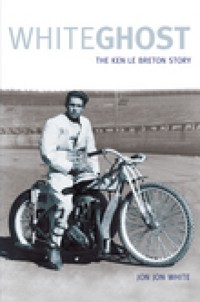
The White Ghost, as Ken Le Breton was known to all, was born in Sydney in 1924. After riding in Australia he came to the UK in 1947 and became one of the favorite riders of his generation. Ken rode for Newcastle Diamonds in 1947-48 and Ashfield Giants in 1949-50. He returned to Australia in the winter of 1950 to continue racing, and was involved in a crash on his home track in a meaningless race on January 5, 1951. He never regained consciousness and died 24 hours later.
Sie lesen das E-Book in den Legimi-Apps auf:
Seitenzahl: 270
Veröffentlichungsjahr: 2004
Das E-Book (TTS) können Sie hören im Abo „Legimi Premium” in Legimi-Apps auf:
Ähnliche



















WHITEGHOST
THE KEN LE BRETON STORY
WHITEGHOST
THE KEN LE BRETON STORY
JON JON WHITE
IN MEMORY OF NORRIE ISBISTER
A good, kind and wonderful friend sorely missed.
This book is humbly dedicated to all those riders who gave their lives, whilst participating in a sport that they loved and cherished, and also to all the forgotten survivors who suffer still, in great pain from injuries received in the pursuit of speedway greatness.
First published in 2003
The History Press
The Mill, Brimscombe Port
Stroud, Gloucestershire, GL5 2QG
www.thehistorypress.co.uk
This ebook edition first published in 2013
All rights reserved
© Jon Jon White, 2003, 2013
The right of Jon Jon White to be identified as the Author of this work has been asserted in accordance with the Copyright, Designs and Patents Act 1988.
This ebook is copyright material and must not be copied, reproduced, transferred, distributed, leased, licensed or publicly performed or used in any way except as specifically permitted in writing by the publishers, as allowed under the terms and conditions under which it was purchased or as strictly permitted by applicable copyright law. Any unauthorised distribution or use of this text may be a direct infringement of the author’s and publisher’s rights, and those responsible may be liable in law accordingly.
EPUB ISBN 978 0 7509 5251 4
Original typesetting by The History Press
CONTENTS
Testimony and Appreciation
Affirmation and Commemoration
Acknowledgements
Forewords
Introduction
one
Battling the odds
two
If dreams come true
three
A lullaby of home
four
Never travel a straight road
five
Beyond the blue horizon
six
Not such a jolly…
seven
Precious memories
eight
The lost tales from ‘Any old where’
nine
More one cannot be
ten
Tributes and Soliloquy
Appendices (Statistics and Results)
one
Summary of Teams’ Statistics and Results 1947-1950
two
Ken Le Breton’s Official Match Races
three
Australian & New Zealand Results, 1946-1951
TESTIMONY
As Ken’s only surviving sibling, I feel honoured to have been invited to add a personal testimony to his memory. In our childhood years, Ken was the typical brother to his siblings except in one respect. He was always protective of me. ‘Nobody dare touch his little sister.’ So, as for me, I have only fond memories of growing up with a loving brother.
Our dad, Frank, was Ken’s most devoted admirer and mentor, from his very first practice session to trying to give some comfort in cradling his son’s injured head in that ambulance ride to the hospital, from where he was never to regain consciousness. I cannot imagine a more devastated father.
Ken loved and respected his mother. During his final unconscious breaths, as we stood around that bedside, his last and only word was ‘Mum’. I wondered if in some way he sensed her presence.
Over the years, much has been recorded of Ken’s many deeds and accomplishments, as our photo albums and yellowed press cuttings bear witness. They have been lived out, and passed on. But it is the ‘spirit’ of the man that lives on. In this biography, Jon Jon captures the true ‘spirit’ of my dear brother Ken.
Marie Mitchell (Ken’s sister)
APPRECIATION
I would like to extend my heartfelt deep appreciation to Ken’s sister Mrs Marie Mitchell (née Le Breton), her husband Sam Mitchell and their lovely family for their belief and enthusiasm. They are charming and wonderful people whose kindness knows no bounds. They told me so much about Ken’s early family life and provided many of the rare photographs. This book is for them.
AFFIRMATION
They simply would not listen to me. I said to them, there are people not yet born who will come to marvel at what this young man tried to do. Words borne out of sadness have stood the test of time. Ken Le Breton, the White Ghost, is dead, but his spirit and soul live on…
Ron Johnson, the former New Cross captain, speaking on the occasion of the first anniversary of Ken’s death.
COMMEMORATION
Ken was essentially a quiet man, gentle, kind, often very shy and retiring. The brash loudness and aggression of his image was his alter ego. He loved his work beyond anything else in his life. What a wonderful joy for a man to have been able to work at what he loved best, with the people he knew and cared for around him, to achieve the heights of success in his profession and to be remembered with love and affection by so many. He dreamed a dream and the dream became a reality.
Kathleen Le Breton (Ken’s sister)
ACKNOWLEDGEMENTS
There can be no easy beginning or ending to this list of thank-yous. I am indebted to the encouragement, support and co-operation of Ken’s former friends, and to the many fans who never actually saw him race, but still fell under his spell. They shared everything they had – their memories and their boxes of old treasures. They read my notes and transcripts and then the draft chapters, and lost almost as much sleep over them as I did. They thanked me for having helped them to ensure a pride of place for a very remarkable man, who meant something special to each of them. I am particularly grateful to Willie Wilson, Ken’s friend and teammate.
I will be forever indebted to the strong and admirable people who loved Ken: his family. Theirs is a dimension always present, but too seldom explored in the telling of this story. The glory of this book is theirs; the mistakes and omissions are mine.
Thanks are also offered to the National Archives of Australia; Colin Garbutt of The Defence Service Records, Australian Army Soldier Career Manage-ment Agency; Mr D.F. Gibson of the Australian Government; Carlton and Rank Organization; Wessex Films; Speedway News; Speedway Post; Speedway Star; Speedway Mail; Speedway Gazette; Speedway World; Broadsider; Vintage Speedway Magazine; Newcastle Chronicle/Journal; Glasgow Herald; Glasgow Evening Times; Evening Citizen; Scottish Daily Record; Daily Mail; BBC Scotland; Karl Magee of the Mitchell Library in Glasgow; the librarian and staff of the Newcastle Civic Library. Special appreciation must also go to Gordon Dobie, Hugh Vass, Brian Darby, Jim Shepherd, Rob Andrews, John Jarvis, Robert Bamford, John Chaplin, Mike Hunter and Barry Wallace.
It has been virtually impossible to ascertain all the names of the photographers. We duly acknowledge Frank Le Breton, Allan Gerrard, Norrie Isbister and Molly McPhee. To all those others who helped in this project, no matter how small the contribution, you all displayed nothing but kindness itself.
FOREWORDS
This book powerfully brings to mind the numbing shock which I felt when I heard that Ken Le Breton had been killed in a racing accident in Australia. The news swept rapidly across the country and I imagine that almost all those who were involved in speedway at that time shared my feelings. Ken was the personification of all that we wished to be and his death seemed almost unbelievable; indeed, for a time rumour was rife that it was a hoax. This could be considered odd, given that those of us involved in speedway were used to losing friends and comrades, but Le Breton was someone special – had he lived, he would surely have been World Champion in another year or two.
During my association with him (a mere couple of years at Glasgow’s Ashfield track), he had been more than an employee and comrade – he was also my friend. Due to the passage of time, I think it has been forgotten, and perhaps not even fully comprehended, that he was also a man.
Faced with this legend of the ‘White Ghost’, Jon Jon set himself a task of deciding and explaining what he was really like. Many other writers in their own various fields have sought similar objectives before, but there can be few who have faced a more difficult problem. A life that was over in only twentysix years is not an easy prospect to write about; it is even harder for a life concentrated on speedway, for it is a kind of specialised way of living, which even now is not thought of as being an admirable way to make a living. A life that became a legend in its own time tends to portray the image, not the identity. At this point I must say that I take some of the blame in encouraging Jon – but when he did speak of his intention of writing this book, I had grave doubts as to how he would fare and whether the book would ever actually see the light of day.
The initial reading of what he has written so far has vindicated my belief in him, and he has succeeded admirably. Jon gathered up the pieces and dissected the legend, separating the myths and reconstructing the man. In doing so, he shows us that Le Breton, far from being first amongst equals, gifted with virtues and skills, was in fact a rather ordinary person, and not even endowed with particularly good health. Le Breton the man and his achievements now appear all the more remarkable and all the more heroic than the legend itself. Jon has set Ken Le Breton in an abiding place, to which legend and rumour might have otherwise, ultimately, denied him.
Norrie Isbister
Glasgow, 1989
I put Ken in the category of not only being a great rider, but also one of the world’s leading speedway personalities. He was a real patriot, had a rapport with the fans that few other riders have ever had, and they duly responded to him and saw him in a different light. They never somehow seemed to compare him to other riders. There was always a kind of special, honourable place for Ken. Other great riders came before him, but when Ken arrived on the scene, he mapped out a place for himself and as a result became well respected. It was a thrill for me to have been in the same team, and to have ridden alongside him. Even speedway riders have their favourite riders and Ken was definitely mine.
Willie Wilson
(Ashfield/Belle Vue)
I don’t really feel I’m qualified to write about Ken as he was one of the very few great post-war riders I did not have the pleasure of seeing in action. But, you certainly could say he was the embodiment of the unique showmanship gifted to only a very great few in any walk of life and that he is a ghost that will forever haunt wherever and whenever men ride racing motorcycles.
Dave Lanning
(Speedway journalist and broadcaster)
INTRODUCTION
There can be no question that Ken Le Breton was a star, universally loved as a human being. He was also thoughtful, intelligent, studied and articulate, and able to write and verbalise his thoughts on many subjects besides speedway, his first love. The strength and happiness of his marriage to his wife, Joan, represented something priceless to them both; she, in her own quiet manner, helped Ken sustain his love of speedway. Ken did not give many interviews, but his answers read like an oral history of his times. He was always diplomatic, but there didn’t seem to be a question he would not answer, and there is no reason to believe that everything he did say and write was not 100 per cent truthful. Of course, Ken does not answer all the questions we would have wished to have answered.
In his tragically short life, Ken brought immense pleasure and joy and many long-lasting memories to the thousands of supporters who appreciated what he brought to speedway. He exhibited a fiercely competitive spirit that was both excitable and unforgettable. He was far, far superior to most of the other riders of his day. He was a first-class technician and noted for his highly developed style of riding. A fair and decent rider, he never resorted to foul or unfair tactics. He would always gracefully acknowledge the endeavours of his fellow competitors, especially when he was defeated. He generated a genuine warmth in all who came into contact with him – fans, promoters, the media, fellow riders and track staff.
Ken Le Breton’s impact upon the public and his resulting fame is unique. His talent and gift for communication made him extremely popular wherever he went, but out on the track he was different, although still as charismatic as ever. Ken’s warm and generous personality ensured him great respect and admiration, as was his concern and consideration for all men and women regardless of their position in life. His intelligence and wit were legendary. In the unreal world of speedway, it takes a strong man to pursue a career and still remain a genuine, decent person. Ken made sure that speedway never took over his real self.
For those who were touched by his presence either on or off the track, the experience was dramatic. Captivated by his unique force of racing speedway, they became lifelong believers. His vulnerability and honesty, his daring, and the sheer beauty of his kind of stylish riding, cut through to their hearts, and it remains there still. The enormity of his image and the magic of his persona for those who were fortunate to have seen him during those few short years, riding all sorts of tracks in all kinds of conditions and various settings, leave them with a frustrating experience in trying to describe what they had witnessed. He was endowed with the greatest gift a man can have – talent.
One
BATTLING THE ODDS
Francis James Le Breton was born on 15 August 1924 in Kogarah, Sydney, New South Wales. At home, he was Frank junior to the family; his childhood friends called him Jim. In the Forces his buddies named him Ken, but the world knew him as ‘The White Ghost’. It was around this time that dirt-track racing, or speedway as it soon came to be known, also came into being.
As a child, he was highly spirited and mischievous. At school, he tried his hand at everything, but excelled at nothing. It was only with the onset of war that signs of a special calibre begin to emerge, and even then only gradually. During this period, Ken’s first priority and achievement was to survive. Thereafter, his combat experience became an asset, and his resolution and strength of mind now had something definite to aim at: the hard, harsh, cruel world of high-speed motorcycle racing, at which he was to excel, and ultimately give his life to. Surprisingly, very little was known and understood about Ken Le Breton as an individual. The problem lies in deciding what he was really like. To reconstruct a lost life from brief glimpses and faint echoes has been a long and difficult process, even more so when its adulthood has scarcely been reached.
In the society of those heady days of the ‘boom years’ of speedway, relationships were often intense, measured in snatches of time for what he had achieved rather than what he was. Fifty years on, it is hardly surprising that a lot of what people remember about Le Breton was that he was a ‘good bloke’. Only those that knew Le Breton well can take us closer. Even then, the insights only go so far. Le Breton’s wife produced a brief memoir recently, but her portrait reveals surprisingly little about the man her husband was.
The recollections of the promoters and staff at the various tracks where Ken Le Breton rode are inclined to be of a vivid, bustling nature; everyone remembers a decent, fair-minded person, who was not above cracking a joke or two. Ken was essentially a very determined man, which seldom takes us any further into his psyche. This was not their fault, as a rule Le Breton did not mix closely with those whose duties did not expose them to the same dangers that he and his compatriots faced. His relationships with his fellow riders were far more intimate, and to Le Breton rather more special than he was able to achieve with outsiders. The private opinions of his mentors are even harder to ascertain, for many have long since passed away. Perhaps, as Johnnie Hoskins himself once remarked,
That Le Breton was as great a rider as speedway ever bred, his natural aptitude for inspiration and leadership was unquestionable, his outstanding skill was only matched by his bravery. Extremely gifted.
Hoskins freely admitted that any conversations he had with Le Breton were always brief, and to the point. Others, outside Le Breton’s circle, claim they were impressed with his gutsy performances, but that he was nothing special, and was always thought of as another stunt of Hoskins. What was unusual about Le Breton was that he lived long enough for his staying power and experience to combine into an endeavour of utter single-minded professionalism. If objectivity is elusive from these quarters, those within his circle are equally hard to come by with some degree of accuracy. Willie Wilson, a former teammate, who rode both for Ashfield and Belle Vue, remembers that:
Ken had this kind of aggressive stance, legs slightly apart, straight upright, hands folded across his chest. His face seemed to be kind of pugnacious, the chin just pushed forward a fraction, teeth clamped, but his eyes always gave him away.
What drew a person’s attention to him were his eyes. They were a greyish blue, full of sparkle, but with a hint of action or mischief, behind which laid a more complex, complicated, contradictory and very vulnerable person. Le Breton is well remembered by all those he ever came into contact with for his verve and charm. Again, there are those who say he was opinionated and self-centred. However, his employers and those in authority found him to be disarmingly modest. In fact, in most of his time in speedway, he always ‘had’ to impress people time and time again, a tendency to which his colleagues reacted in different ways, but seldom with indifference. As a front-runner, he was both feared and admired, often impulsive. Sometimes, although not as often as some have declared, he would go off the deep end and might be rather annoyed, but these moments were few and far between. Le Breton attracted far more companions than he did close friends. This was a special relationship that was reserved for those who could accept him on his terms, and he had a great respect and tolerance for all of those who shared his love of speedway.
Some of the contradictions regarding Le Breton can be resolved by his strongest traits, an ingenuousness which enabled him to confront authority and people, his close relationships, and whatever tasks were at hand, as well as a directness and astute versatility. This simplicity meant that his friendships were all approached wholeheartedly, and his opinions were all frank – this type of openness could enchant and antagonise in equal measure. It should be borne in mind, however, that these traits depended upon his given circumstances at any given moment – the surroundings, the company kept, previous lessons learnt. Behaviour and responses can and do change a man, especially in his early life, and more so in time of war, when Le Breton was forced to mature very quickly.
Le Breton’s unrelenting enthusiasm for speedway racing was always a source of comment – he seemed to have no sense of fear, and many perceived that he was perhaps a glory hunter. It is an undisputed fact, however, that towards the end of the 1950 racing season, those around him began to detect symptoms of apparent restlessness and irritability. Amongst his speedway associates, he remained outwardly steadfast; it surely goes without saying that he would have confessed his real feelings to his wife, Joan. However, the question is not whether Le Breton actually knew about this anxiety, but just how he managed to keep this fear in check. When asked if he was frightened of dying, he replied by saying: ‘No, not really. I have friends waiting for me up there – when the time comes, I will be more than pleased to see them all again.’
Until that day arrived, he lived and worked hard, pouring all his energy into his chosen career. He had faced death before, it was nothing new to him and he simply took each day (and race) as it came. This may explain why he was at ease with himself. Having survived terrible jungle warfare, he had managed to prove himself wrong, so he deliberately embraced speedway with its constant threat of death as one might crossing a busy street. He had seen Death’s face before, and it had ignored him. It was not ready for him, but when it was, it made no mistake. His death was unnecessary, a self-fulfilling prophecy.
Le Breton was a born leader. To those who worked with him, there was no question about that. He knew exactly what he wanted and he also knew how to get it. It wasn’t a matter of being stubborn; it was just that Le Breton knew what he was doing. His attitude was that if he couldn’t race a speedway machine, then he had no business owning one. There was nothing phoney about his self-confidence. He was a strong man, and like all strong men, he wanted to have things his way. Usually he got it; if he didn’t, then he wanted to know the reason why. Strong men take a delight in tackling roadblocks, but when they can’t meet them face to face, then no amount of inner fortitude will help much.
The world of speedway is a mixture of all things to different people. The buildup to a race and the atmosphere at the track can be intoxicating. The one overriding factor is that the public always enjoy themselves, whilst at the same time appreciating the efforts of those who are doing what they probably all dreamed of doing themselves. In the arena there is an air of expectancy and anticipation, of settling down to an entertaining evening full of high excitement.
Behind the scenes it would be no less exciting. However, here, it was a different kind of world, and it could be a fascinating place to be in. It is a scene of organised ritual, unpacking and assembling, preparing machines and equipment, not forgetting the heated arguments that can often occur. Nerves also play their part, and everyone seems to have their own way of dealing with them – it comes with the territory, and playing the part of a performer. Some crack endless jokes, some are quiet, some chain-smoke; all the riders would be aware of the inherent risks of their chosen sport, and have established some kind of inner peace within themselves.
Ken Le Breton arrived in speedway with a ragged reputation, no better, no worse than any other novice eager to make his mark. He was often blindingly fast, but along with his pace, there was a cautious edginess, which would vary between the extremes of reckless abandon and a supreme reluctance to turn the power on. He walked away from his early accidents relatively unscathed, and pursued a policy of putting into practice his mechanical and riding talents that was on occasion simply ferocious to behold.
His career was extremely brief, consisting of barely four years. He started when he had just turned twenty-one, after his demobilisation from the army in late 1945. His best year was undoubtedly 1949, when he achieved a great deal, and the future held the promise of better things to come. It was tantalising. One never knew what he might be capable of, for he had already reached the World Final that year. In the months that followed he was sometimes struggling due to occasionally sloppy, error-strewn riding. More often than not, however, he was world class – untouchable – and turned in fantastic performances when they were least expected. He was an expert at precision racing and was a joy to behold on the track, having the silkiest, smoothest of touches. The off-days never seemed to faze Le Breton – he took each race as it came. He genuinely loved the sport – to be involved was all that he asked. It is all the more remarkable that he succeeded, having deliberately chosen the hardest way possible.
If he had decided to become a writer, no doubt Ken would have excelled at that too. We do know he was commissioned to write a series of articles for a weekly or monthly column in various newspapers and magazines. The majority were written under his own name, and it is believed he also acted as a ghostwriter for other riders. However, very few of his articles were actually published, and we are left with only a few fragmentary pages to pick at. The impression, which unfortunately cannot be really substantiated, was that he may have objected to the articles being rewritten or tampered with, and that he withdrew his consent. As it was, his forte was speedway; he became a top-class rider, very much in demand, and this was where his greater ability was on show. It may well also be that the content of the articles were too controversial and serious. If the old speedway magazines of those days are read today, the majority are jocular in tone. On many an occasion, Ken was quite outspoken about this, stating that if those who reported speedway failed to take it seriously, then the public would do the same. Being a man of principle, he would not have subscribed to such levity. He always demanded 100 per cent support. A quiet and modest man, he would have been an easy target.
Even the press couldn’t ignore the days when the angels appeared to have touched him, reducing his speedway rivals to pedal pushers, and endowing the scribes with broken pen-nibs. There were other times, though, far too many some might say, for a rider of Ken’s calibre and talent, when no matter how hard he may have tried, his presence at a meeting went unnoticed. He would oscillate between sublime self-confidence and dithering uncertainty. His ability could be quite quixotic and unusually complex – he was perhaps too sensitive for a speedway rider. However, he was somehow able to draw inner strength from deep within himself and produce some great racing.
Ken wanted that kind of psychological support around him – he needed to be aware that everybody was pulling for him. If everything felt all right, then he was unbeatable. He was able to channel all this goodwill and spiritual energy into his own motivation and concentration. Being an honourable man, he didn’t steal a race from a teammate who trusted him on the last corner of the last lap. For someone like Ken, that would not have been winning a race, for he had too much integrity and pride to even contemplate doing anything like that.
He may well have thought he could influence the powers that were in control, as to the way ahead, by showing how things ought to be organised and operated. Reading between the lines, it was more than likely that his association with Johnnie Hoskins (a man who had had many a bustup with authority over speedway matters) meant that Le Breton was also placed in the same category and considered persona non grata.
In a long conversation with the ‘great man’ himself, one evening in the summer of 1977, Johnnie Hoskins commented:
Ken was indeed a very determined person, and the more obstacles that were put in his way, he had this natural inclination to surmount the problem by attacking it from another direction.
He was emphatic about one point though:
In years to come, it will not be the powers that be, not the promoters, or even the hacks, who will be remembered for their contribution to speedway. It will be those riders who strove to present speedway, as it ought to be. These chaps needed to be listened to. And I don’t mean the riders who seek to secure an influence via a brown envelope. If the riders are not listened to, then the future of speedway and its eventual outcome will be reduced to a meaningless stupid event full of nonsensical regulations, like fox-hunting, pin-bowling, where is the social standing in that? Ken said all of these things and more; he tried to get the young ones involved. Yes, I know times were different then, and life was hard for lots of folk, but he showed them the opportunity for self-motivation. I saw in him, myself, as I ought to have been. We didn’t mix socially, that sort of thing, but we shared many similar thoughts. He was very intelligent and had a great capacity for seeking the truth. I guess the war did that to him. He lost some good friends, I know. It sometimes bothered him, but he seldom talked about that.
It was clear that Johnnie Hoskins vividly remembered the impact his star rider had on those around him at the time and in the aftermath of his death.
Success, when it came, gave Ken Le Breton a distinct professional status, quite disproportionate to his age and standing. He had to work long and hard to achieve that level – to maintain it meant that he had to keep on producing results. His personal record made him one of Johnnie Hoskins’s favourites, so Ken was able to further upgrade his own ideas and tactics. His relative youth may have been looked upon as an intrusion into the running of a heavilyfinanced business had it not been for the unique quality of Le Breton’s erudition. A legendary figure was beginning to emerge out of the youthful ace and leader. He was mature far beyond his years, something upon which many of his family friends often remarked. This developmental gulf between Le Breton and his contemporaries was further enhanced by his military service. His ghost-like ability to appear and vanish without ever saying very much earned him a quiet respect, admiration and deference from his army comrades.
An old family friend, who was also a physician, describes him thus:
Francis was a very beautiful man, almost too beautiful to be a man. He was handsome, darkened hair, slim. His features, very finely chiselled, were perfect and he had a profile that caused people to turn and stare at him. His complexion, skin texture and colouring were not surpassed by the most beautiful of women. BUT… there was absolutely nothing feminine about him in any way. His piercing stare and his unmistakeable acceptance and exercise of authority, caused contemporaries, subordinates and superiors alike to listen and to obey. He was well educated and a highly intelligent man, with an exceedingly good character, that guaranteed everything else about him. He had this direct line of thought, and was astutely analytical of all around him. He was nobody’s fool. He had a good self-discipline and control without harshness, and had this understanding of faults in others, that is rare, but he had no understanding for anything that went against that understanding.
Ken Le Breton also had a great strength of principle, and with it went deep devotion; in a more abstract sense, this enveloped any cause, speedway or otherwise, which he embraced. With such devotion went great warmth and no one felt the glow of this as much as his wonderful wife, Joan. Anyone who was close to the couple knew just how devoted they were. Few people on the outside really knew Ken. He was a naturally shy man. He was never an extrovert. To get out in front of the public was not an easy task to begin with. He knew what people expected of him – a glamour boy, dashing hero type. Such mannerisms didn’t come naturally, he had to work hard at that too, and gradually his charm slowly surfaced, to which people responded wholeheartedly. His quiet sense of humour was his foundation in life and this saw him through.
Nobody can deny that he did everything that was expected of him. His contribution to speedway was tremendous. How much greater it might have been, nobody will ever know. One can only guess. He was an outstanding teacher and instructor to those who would listen. He could teach them to race and win. He gave special attention to any new rider who followed his credo. He would take them aside, indoctrinating his methods and demands that would leave that particular rider thinking that he had done the opposite. Le Breton had a gift for tactics, being a very practical man with an outstanding imagination.




