


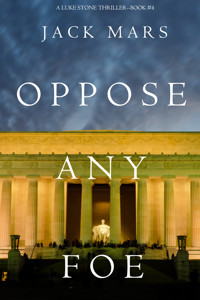
5,99 €
Mehr erfahren.
- Herausgeber: Lukeman Literary Management
- Kategorie: Abenteuer, Thriller, Horror
- Serie: A Luke Stone Thriller
- Sprache: Englisch
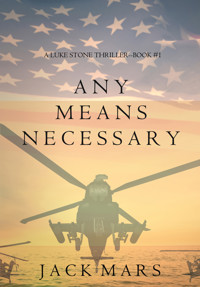
"One of the best thrillers I have read this year. The plot is intelligent and will keep you hooked from the beginning. The author did a superb job creating a set of characters who are fully developed and very much enjoyable. I can hardly wait for the sequel." --Books and Movie Reviews, Roberto Mattos (re Any Means Necessary) OPPOSE ANY FOE is book #4 in the bestselling Luke Stone thriller series, which begins with ANY MEANS NECESSARY (book #1)! A small arsenal of U.S. nuclear weapons are stolen from a NATO base in Europe. The world scrambles to figure out who the culprits are and what their target is—and to stop them before they unleash hell on humanity. With only hours left before it is too late, the President has no choice but to call in Luke Stone, the former head of an elite FBI para-military team. Finally getting his life back in order, and with devastating news on his own family front, Luke does not want the job. But with the newly elected female President desperate for his help, he realizes he cannot turn his back on her. In the action-packed, international cat-and-mouse chase that follows, Luke, Ed and his former team will have to be more daring, and break more rules, than ever before. With the fate of the world at stake, Luke heads into the murky fog of war and espionage, and discovers the culprit is not who he thinks it is after all. A political thriller with non-stop action, dramatic international settings and heart-pounding suspense, OPPOSE ANY FOE is book #4 in the bestselling and critically-acclaimed Luke Stone series, an explosive new series that will leave you turning pages late into the night. Book #5 in the Luke Stone series will be available soon.
Das E-Book können Sie in Legimi-Apps oder einer beliebigen App lesen, die das folgende Format unterstützen:
Seitenzahl: 441
Veröffentlichungsjahr: 2016
Ähnliche











O P P O S E A N Y F O E
(A LUKE STONE THRILLER—BOOK 4)
J A C K M A R S
Jack Mars
Jack Mars is author of the bestselling LUKE STONE thriller series, which include the suspense thrillers ANY MEANS NECESSARY (book #1), OATH OF OFFICE (book #2), SITUATION ROOM (book #3), OPPOSE ANY FOE (book #4), and PRESIDENT ELECT (book #5).
Jack loves to hear from you, so please feel free to visit www.Jackmarsauthor.com to join the email list, receive a free book, receive free giveaways, connect on Facebook and Twitter, and stay in touch!
BOOKS BY JACK MARS
LUKE STONE THRILLER SERIES
ANY MEANS NECESSARY (Book #1)
OATH OF OFFICE (Book #2)
SITUATION ROOM (Book #3)
OPPOSE ANY FOE (Book #4)
CONTENTS
CHAPTER ONE
CHAPTER TWO
CHAPTER THREE
CHAPTER FOUR
CHAPTER FIVE
CHAPTER SIX
CHAPTER SEVEN
CHAPTER EIGHT
CHAPTER NINE
CHAPTER TEN
CHAPTER ELEVEN
CHAPTER TWELVE
CHAPTER THIRTEEN
CHAPTER FOURTEEN
CHAPTER FIFTEEN
CHAPTER SIXTEEN
CHAPTER SEVENTEEN
CHAPTER EIGHTEEN
CHAPTER NINETEEN
CHAPTER TWENTY
CHAPTER TWENTY ONE
CHAPTER TWENTY TWO
CHAPTER TWENTY THREE
CHAPTER TWENTY FOUR
CHAPTER TWENTY FIVE
CHAPTER TWENTY SIX
CHAPTER TWENTY SEVEN
CHAPTER TWENTY EIGHT
CHAPTER TWENTY NINE
CHAPTER THIRTY
CHAPTER THIRTY ONE
CHAPTER THIRTY TWO
CHAPTER THIRTY THREE
CHAPTER THIRTY FOUR
CHAPTER THIRTY FIVE
CHAPTER THIRTY SIX
CHAPTER THIRTY SEVEN
CHAPTER THIRTY EIGHT
CHAPTER THIRTY NINE
CHAPTER FORTY
CHAPTER FORTY ONE
CHAPTER FORTY TWO
CHAPTER FORTY THREE
CHAPTER FORTY FOUR
CHAPTER FORTY FIVE
CHAPTER ONE
October 16
5:25 a.m. Mountain Daylight Time
Marble Canyon
Grand Canyon National Park, Arizona
“They’re coming through on all sides!”
Luke was trying to live until daybreak, but the sun refused to rise. It was cold, and his shirt was off. He had ripped it off in the heat of combat. There was no ammo left.
Turbaned, bearded Taliban fighters poured over the walls of the outpost. Men screamed all around him.
Luke tossed his empty rifle away and pulled his handgun. He fired down the trench on his own position—it was overrun with enemies. A line of them were running this way. More came sliding, falling, jumping over the wall.
Where were his guys? Was anyone still alive?
He killed the closest man with a shot to the face. The head exploded like a cherry tomato. He grabbed the man by his tunic and held him up as a shield. The headless man was light, and Luke was raging with adrenaline—it was if the corpse were an empty suit of clothes.
He killed four men with four shots. He kept firing.
Then he was out of bullets. Again.
A Taliban charged with an AK-47, bayonet attached. Luke pushed the corpse at him, then threw his gun like a tomahawk. It bounced off the man’s head, distracting him for a second. Luke used that time. He stepped into the attack, sliding along the edge of the bayonet. He plunged two fingers deep into the man’s eyes, and pulled.
The man screamed. His hands went to his face. Now Luke had the AK. He bayoneted his enemy in the chest, two, three, four times. He pushed it in deep.
The man breathed his last right into Luke’s face.
Luke’s hands roamed the man’s body. The fresh corpse had a grenade in its breast pocket. Luke took it, pulled it, and tossed it over the rampart into the oncoming hordes.
He hit the deck.
BOOOM.
The explosion was right there, spraying dirt and rock and blood and bone. The sandbagged wall half collapsed on top of him.
Luke clawed his way to his feet, deaf now, his ears ringing. He checked the AK. Empty. But he still had the bayonet.
“Come on, you bastards!” he screamed. “Come on!”
More men came over the wall, and he stabbed them in a frenzy. He ripped and tore at them with his bare hands. He shot them with their own guns.
At some point, the sun rose, but there was no warmth to it. The fighting had stopped somehow—he couldn’t remember when, or how, it had ended. The ground was rugged, and hard. There were dead bodies everywhere. Skinny, bearded men lay all over the ground, with eyes wide and staring.
Nearby, he spotted one crawling back down the hill, trailing a line of blood like the trail of slime that follows a snail. He should really go out there and kill that guy, but he didn’t want to risk being in the open.
Luke’s chest was painted red. He was soaked in the blood of dead men. His body trembled from hunger, and from exhaustion. He stared out at the surrounding mountains, just coming into view.
How many more were out there? How long before they came?
Martinez was sprawled on his back nearby, low in the trench. He was crying. He couldn’t move his legs. He’d had enough. He wanted to die. “Stone,” he said. “Hey, Stone. Hey! Kill me, man. Just kill me. Hey, Stone! Listen to me, man!”
Luke was numb. He had no thoughts about Martinez’s legs, or about Martinez’s future. He was just tired of listening to Martinez’s complaints.
“I’d gladly kill you, Martinez, just for whining like that. But I’m out of ammo. So man up… okay?”
Nearby, Murphy was sitting on an outcropping of rock, staring into space. He wasn’t even trying to take cover.
“Murph! Get down here. You want a sniper to put a bullet in your head?”
Murphy turned and looked at Luke. His eyes were just… gone. He shook his head. An exhalation of air escaped from him. It sounded almost like laughter. He stayed right where he was.
If more Taliban came, they were toast. Neither one of these guys had much fight left in them, and the only weapon Stone still had was the bent bayonet in his hand. For a moment, he thought idly about picking through some of these dead guys for weapons. He didn’t know if he had the strength left to stand. He might have to crawl instead.
As he watched, a line of black insects appeared in the sky far away. He knew what they were in an instant. Helicopters. United States military helicopters, probably Black Hawks. The cavalry was coming. Luke didn’t feel good about that, or bad. He felt nothing. Emptiness was an occupational hazard. He felt nothing at all….
Luke was awakened by his ringing phone. He lay there and blinked.
He tried to orient himself. He was in a tent, he realized, at the bottom of the Grand Canyon.
It was just before first light, and he was in the tent he shared with his son, Gunner. He stared into the black night, listening to the sound of his son’s deep breathing nearby.
His phone kept ringing.
It vibrated against his leg, and made the annoying buzzing sound that phones set to vibrate make. He didn’t want to wake Gunner, but this was probably a call he needed to take. Very few people had this number, and they were people who wouldn’t just call to shoot the breeze.
He glanced at his watch: five thirty a.m.
Luke unzipped the tent, slid out, then zipped it up again. Nearby, in the first pale light of the gathering day, Luke saw the other two tents—Ed Newsam in one, Mark Swann in the other. The remains of last night’s fire were in the circle of stones at the center of the camp—there were still a few coals glowing red.
The air was cool and crisp—Luke wore only boxer shorts and a T-shirt. Goosebumps popped up along his arms and on his legs. He kicked his feet into a pair of sandals and walked down to the river, past where the raft was tied up. He wanted to get far enough away from the campsite so that he didn’t wake anyone.
He sat on a boulder and gazed at the rising walls of the canyon. Just below him, although he could barely see it, was the sound of trickling water. Downriver, maybe half a mile away, he could hear the rushing of the next set of rapids.
He looked at the phone. He knew the number by heart. It was Becca. Probably the last person he wanted to hear from right now. He’d had Gunner for five days, which was perfectly legal, according to their agreement. Yes, Gunner had been out of school during that time, but the kid was some kind of genius—there was talk of him skipping grades, not falling behind.
To Luke’s mind, getting him out into the wild, enjoying nature and testing himself both physically and mentally, was good for him—and probably more important than anything he might get up to at home. Kids nowadays—they spent a lot of time staring into video screens. It had its place—those screens were powerful tools, but let’s limit it to that. Let’s not allow them to take the place of family, physicality, fun, or imagination. Let’s not pretend that real adventure, or even experience, took place inside of a computer.
He called her back, his mind alert, but open. Whatever game she tried to play, he would stay calm and be as reasonable as he could.
The phone rang once.
“Luke?”
“Hi, Becca,” he said, his voice low and friendly, acting like it was the most normal thing in the world to call someone back before sunrise. “How are you?”
“I’m okay,” she said. Her speech with him was always abrupt, tense. His life with her was over—he recognized that. But his life with his son was just beginning, and he was firm that he would navigate any roadblocks she might try to put in his way.
He waited.
“What is Gunner doing?” she said.
“He’s sleeping. It’s still pretty early here. The sun’s not even quite up yet.”
“Right,” she said. “I forgot about the time difference.”
“Don’t worry about it,” he said. “I was awake anyway.” He paused for a few seconds. The first glint of real sun was appearing in the east, a ray of light which peeked over the rim of the canyon and played on the cliff wall to the west, turning it pink and orange.
“So what can I do for you?”
She didn’t hesitate. “I need Gunner to come home right away.”
“Becca—”
“Don’t fight me on this, Luke. You know it won’t hold any water with the judge. A special operations agent with diagnosed post traumatic stress disorder and a history of violence wants to take his young son on outdoor adventures, which, by the way, causes his son to miss entire weeks of school. I can’t believe I even agreed to this in the first place. I’ve been so distracted that I—”
He interrupted her. “Becca, we’re in the Grand Canyon. We’re rafting. You do realize that, don’t you? Unless a helicopter lands down here to pick us up, we are probably three days from reaching the South Rim. Then a night in the lodge there, and a full day’s drive down to Phoenix. Which sounds about right, because as I recall it, our plane tickets back are scheduled for the twenty-second. And by the way, this whole PTSD diagnosis isn’t real. It never happened. No doctor has ever even suggested it. It’s just something that you’ve manufactured in your—”
“Luke, I have cancer.”
That stopped him in his tracks. In recent days, she had been more agitated than he’d ever seen her before. Of course he had noticed this, but mostly ignored it. It was typical of her, and the amount of pressure she put on herself. Becca was a Grade A stress case. But this was different.
Luke’s eyes watered, and a thick lump formed in his throat. Could it be true? Whatever had happened between them, this was the woman he had fallen in love with. This was the woman who had carried his child. At one time, he had loved her more than anything in this world, certainly more than he loved himself.
“Jesus, Becca. I’m so sorry. When did that happen?”
“I was feeling sick all summer. I lost some weight. At first, it was no big deal, but then it became a surprising amount of weight. I thought it was from all the anxiety, everything that’s happened in the past year—the kidnapping, the train crash, all the time you’ve been away. But things have calmed down a lot, and the sickness didn’t stop. I went for tests starting a couple weeks ago. I had been vomiting. I didn’t want to tell you until I knew more. Now I know more. I saw my doctor yesterday, and she told me everything.”
“What is it?” he said, though he was not sure he wanted to hear the answer.
“It’s pancreatic,” she said, dropping perhaps the worst bomb he could have imagined. “Stage Four. Luke, it’s already metastasized. It’s in my colon, in my brain. It’s in my bones…” Her voice trailed off, and he could hear her sob two thousand miles away.
“I’ve been crying all night,” she said, her voice breaking. “I can’t seem to stop.”
As bad as he felt, Luke found that his thoughts suddenly weren’t with her—they were with Gunner. “How long?” he said. “Did they give you a timeframe?”
“Three months,” Becca said. “Maybe six. She told me not to hang my hat on that. A lot of people die very quickly. Sometimes there’s a miracle and the patient lives on and on indefinitely. Either way, she told me I need to get my affairs in order.”
She paused. “Luke, I’m so afraid.”
He nodded. “I know you are. We’ll be there as soon as we can. I’m not going to tell Gunner.”
“Good. I don’t want you to. We can tell him together.”
“Okay,” Luke said. “I’ll see you soon. I’m very sorry.”
The hang-up was awkward. If only they hadn’t been fighting all these months. If only she hadn’t been so hostile to him. If these things hadn’t happened, maybe he could have found a way to comfort her, even from this distance. He had become hardened against her, and he didn’t know if there was any softness left.
He sat on the boulder for several minutes. Light began to fill the sky. He didn’t reminisce about the good memories with her. He didn’t go over all the battles they’d fought this past year, and how vicious and dug in she’d been. His mind was a blank. That was for the best. He needed a way out of this canyon, and he needed to break the news to Ed and Swann that he and Gunner were leaving.
He pushed off the rock and walked back to camp. Ed was awake and crouched by the fire. He had started it up again and had put the coffee pot on. He was shirtless, wearing nothing but a pair of red boxer briefs and flip-flops. His body was thick rippling muscle and ropey veins, hardly an ounce of fat on him—he looked like a martial arts fighter about to enter the cage. He watched Luke approach, then gestured to the west.
Over there, the sky was still cobalt blue, the night retreating, being chased away by the light coming from the east. At the very top, the towering walls of the canyon were lit by a sliver of sun now, setting their striations aflame in red, pink, yellow, and orange.
“Damn, that’s pretty,” Ed said.
“Ed,” Luke said. “I’ve got bad news.”
CHAPTER TWO
9:15 p.m. Greenwich Mean Time (4:15 p.m. Eastern Daylight Time)
Molenbeek Suburb
Brussels, Belgium
The thin man could speak Dutch.
“Ga weg,” he said under his breath. Go away.
His name was not Jamal. But that was the name he sometimes gave to people, and the name that many, many people had come to know him by. Most people called him Jamal. Some called him the Phantom.
He stood in the shadows near an overflowing garbage can, just inside a narrow cobblestone street, smoking a cigarette and watching a police car parked on the main avenue. The street he was on was little more than an alleyway, and as he stood back in the shadows, he felt certain no one could see him there. The empty boulevards and sidewalks and alleys of the infamous Muslim slum were wet from a hard, chilly rain that had stopped maybe ten minutes before.
The place was a ghost town tonight.
On the boulevard, the police car pulled out from the curb and rolled quietly down the street. There was no other traffic.
A tickle of excitement—it was almost fear—went through Jamal’s body as he watched the police. They had no reason to harass him. He wasn’t breaking any laws. He was a well-dressed man in a dark suit and Italian leather shoes, with a clean-shaven face. He could be a businessman, or the owner of these low-rise tenement buildings all around him. He wasn’t the type for the police to randomly stop and search. Even so, Jamal had fallen into the hands of the authorities before—not here in Belgium, but in other places. His experiences were unpleasant, to put it mildly. He had once spent twelve hours listening to himself scream in agony.
He shook his head to clear the dark thoughts, finished his cigarette in three deep inhales, ignored the garbage can, and pitched the butt on the ground. He turned back down the alley. He passed a round red sign with a horizontal white stripe—DO NOT ENTER. The street was too narrow for car traffic. If the police suddenly decided they wanted to pursue him, they’d be forced to do so on foot. Either that, or circle around several blocks. By the time they returned, he’d be gone.
After fifty meters, he turned quickly and unlocked the entrance to a particularly dilapidated building. He climbed a narrow stairwell three stories until it dead-ended at a thick, steel-reinforced door. The stairs were old, made of wood and crazily warped. The whole stairwell seemed to twist this way and that like taffy, giving it the feeling of a carnival funhouse.
Jamal made a fist and hammered on the heavy door, his knocks coming in a careful sequence:
BANG-BANG. BANG-BANG.
He paused a few seconds.
BANG.
A gun-hole slid open and an eye appeared there. The man on the other side grunted as he verified who it was. Jamal listened to the guard turn keys in locks, then remove the steel t-bar wedged into the floor at the bottom of the door. The police would have a very hard time entering this apartment, if their suspicion ever fell upon it.
“As salaam alaikum,” Jamal said as he entered.
“Wa alailkum salaam,” the man who opened the door said. He was a tall, burly man. He wore a grimy sleeveless T-shirt, work pants, and boots. A thick unkempt beard covered his face, meeting the mass of curly black hair on his scalp. His eyes were dull. He was everything the thin man was not.
“How do they seem?” Jamal said in French.
The big man shrugged. “Good, I think.”
Jamal passed through a beaded curtain, down a short hallway, and entered a small room—what would have been the living room if a family were occupying this place. The dingy room was crowded with young men, most wearing T-shirts, jerseys from their favorite European football teams, track pants, and sneakers. It was hot and humid in the room, perhaps from the proximity of all the bodies in a small space. It smelled like wet socks mingled with body odor in there.
In the center of the room, on a wide wooden table, sat a bullet-shaped device made of silver metal. It was about a meter long and less than half a meter wide. Jamal had spent time in Germany and Austria, and the device reminded him of a small beer keg. In fact, except for its weight—it was quite light—it was a very close replica of an American W80 nuclear warhead.
Two young men were at the table while the others circled around and watched. One stood in front of a small laptop computer mounted inside a steel suitcase. The suitcase had a panel which ran alongside the laptop—there were two switches, two LED lights (one red and one green), and a dial built into the panel. A wire ran from the case to another panel along the side of the warhead. The entire device—the suitcase and the laptop inside it—were known as a UC 1583 controller. It was a device designed for one task only—to communicate with a nuclear weapon.
The second man was bent over a white envelope on the table. He wore an expensive digital microscope affixed to his eye, and slowly scanned the envelope, looking for what he knew must be there—a tiny dot, no larger than the period at the end of a sentence, in which there was embedded the code that would arm and activate the warhead.
Jamal moved closer to watch.
The young man with the microscope slowly scanned the envelope. Every few seconds, he covered the microscope with his hand and took a larger scale view with his uncovered eye, looking for ink spots, blemishes, any dots that were likely suspects. Then he dove back in with the microscope.
“Wait,” he whispered under his breath. “Wait…”
“Come on,” his partner said, an air of impatience in his voice. They were being judged not just for accuracy, but for time. When their moment came, they would be forced to act very quickly.
“Got it.”
Now it was the partner who was on the spot. From memory, the young man typed in a sequence that enabled the laptop to accept an arming code. His hands shook as he did so. He was nervous enough that he botched the sequence on the first attempt, canceled, and started over.
“Okay,” he said. “Give it to me.”
Very slowly and clearly, the man with the microscope read a sequence of twelve numbers. The other man typed each number as it was spoken. After twelve, the first man said “Done.”
Now the man at the laptop went through another short sequence, flipped the two switches, and turned the dial. The green LED light on the panel popped on.
The young man smiled and turned to his instructor.
“Armed and ready to launch,” he said. “God willing.”
Jamal also smiled. He was an observer here—he had come to see how the recruits were progressing. They were true believers, preparing for what was likely a suicide mission. If the codes were entered incorrectly, the warheads might simply shut themselves down—they might also self-destruct, dispersing a deadly cloud of radiation and killing everyone in the vicinity.
No one was sure what would happen in the event of an incorrect code. It was all hearsay and speculation. The Americans kept those secrets closely held. But it didn’t matter. These young men were willing to die, and that’s probably what they would do. Regardless of the codes, when the USA discovered that their precious nuclear weapons had been stolen, they weren’t going to respond kindly. No. The giant beast would lash out, its tentacles flying, destroying everything in its path.
Jamal nodded and recited a silent prayer of thanks. It had been quite a task pulling together this project. They had the mujahideen necessary—but then, young men willing to die for their faith were easy to acquire.
The other elements were more challenging. They would soon have the launch platforms and the missiles—Jamal would see to that himself. The codes had been promised, and he was certain they would receive them as described. Then all they would need were the warheads themselves.
And soon, if it was Allah’s will, they would have those as well.
CHAPTER THREE
October 19
1:15 p.m. Eastern Daylight Time
Fairfax County, Virginia—Suburbs of Washington, DC
Luke had hired a chopper to take himself and Gunner out of the canyon. He had finagled a new flight for them, and driven like the devil to make it to Phoenix in time to catch the plane. All the while, he had fended off Gunner’s questions about why they had left so abruptly.
“Your mom just wants you home, Monster. She misses you, and she doesn’t like you skipping all this school.”
In the passenger seat, the highway zooming by his window, Luke could see Gunner’s antennae twitching like crazy. He was a smart kid. He was already learning to catch people lying. Luke hated—hated!—that he had to be one of the first people Gunner would catch.
“I thought you worked all that out with Mom before we left.”
“I did,” Luke said with a shrug. “But it got unworked out. Listen, we’ll all talk about it when we get there, okay?”
“Okay, Dad.”
But Luke could see that it was not okay. Soon, it would be a lot less okay.
Now, two days later, here he sat, on the big plush sofa in the living room of his former house. Gunner was at school.
Luke glanced around the place. Once upon a time, he and Becca had had a great life here. It was a beautiful home, modern, like something out of an architectural magazine. The living room, with its floor to ceiling windows, was like a glass box. He pictured Christmas time—just sitting in this stunning sunken living room, the tree in the corner, the fireplace lit, the snow coming down all around as if they were outside, but they were inside, warm and cozy.
God, it was nice. But those days were gone.
Becca bustled around, cleaning up, dusting, putting various things away. At one point in the conversation, she took the vacuum cleaner out of the closet and let it rip. She was in a very bad place psychologically. He had tried to hug her when he first arrived, but she had gone wooden, her arms at her sides.
“I was over you, did you know that?” she said now. “I was ready to move on with my life. I even went on a few coffee dates when you had Gunner with you this summer. Why not? I’m still young, right?”
She shook her head bitterly. Luke said nothing. What was there to say?
“Do you want to know something about yourself, Luke? The first one I met, he was a teacher on his summer vacation, nice guy, and he asked me what you do for a living. I told him the truth. Oh, my ex-husband’s some kind of secret assassin for the government. He used to be in Delta Force. You know what happened after that? I’ll tell you. Nothing happened. It was the last I ever heard from him. He heard Delta Force and he disappeared. You frighten people, Luke. That’s my point.”
Luke shrugged. “Why don’t you just tell them I do something else? It’s not like I’m going to—”
“I did. Once I caught on, I started telling people you’re a lawyer.”
.For a second, Luke wondered what the plural “people” meant. Was she going on dates every day? Two a day? He shook his head. It was none of his business anymore, as long as she was safe. And even that… she was dying. She would never be safe again, and there was nothing he could do about it.
A long paused passed between them.
“Do you want to get a second opinion?”
She nodded. She looked numb, in shock, like the survivors of disasters and atrocities Luke had seen so many times. The amazing thing was that she also looked perfectly healthy. A little thinner than usual, but no one would ever guess that she had cancer. They would probably think she’d been on a diet.
It’s the chemo that makes them look sick. Half the time, it’s also what kills them.
“I’ve already gotten a second opinion from an old colleague of mine. I’m going for a third opinion early next week. If it’s consistent with what I’ve already heard, then by Thursday, I’ll begin the protocols.”
“Is surgery an option?” Luke said.
She shook her head. “It’s too late for that. The cancer is everywhere…” Her voice trailed off. “Everywhere. Chemotherapy is the only option. If I exhaust the approved chemo drugs, then maybe clinical trials, if I’m even still alive.”
She started crying again. She stood in the middle of the living room, abjectly, her face buried in her hands, her body shaking with the sobs. To Luke, she looked just like a little girl. It stung him to see her reduced to this. He had been around death a lot in his life, seen too much of it, but this? It couldn’t be true. He stood, and went to her then. He would comfort her if he could.
She pushed him away, violently, like a child in a playground fight.
“Don’t touch me! Get away from me!” She pointed at him, her face a raging mask of anger. “It’s you!” she shrieked. “You make people sick, don’t you realize that? You steal all the oxygen in the room. You and your superhero garbage.”
She bobbed her head from side to side, mocking him. “Oh, I’m sorry, honey,” she said in a caricature of a low masculine voice. “I’ve got to run off and save the world. No telling if I’ll be alive or dead three days from now. Raise the boy for me, won’t you? Just doing my patriotic duty.”
She was seething. Her voice went back to normal. “You do it because it’s fun, Luke. You do it because you’re irresponsible. You enjoy it. For you, there are no consequences. You don’t care if you live or die anyway, and everybody else has to deal with the fallout and the stress.”
She burst into tears. “I’m done with you. I’m just done.” She waved her hand at him. “I’m sure you can find your own way out of here. So just go. Okay? Go away. Let me die in peace.”
With that, she left the room. A moment of silence passed, and then he heard her down the hall in the master bedroom, sobbing.
He stood there for a long moment, not sure what to do. Gunner would be home in a couple of hours. It wasn’t a good idea to leave him here with Becca, but he didn’t know if he had much choice. She had custody. He had visitation rights. If he took Gunner with him now, without her permission, it was technically kidnapping.
He sighed. When had the legalities of a situation stopped him before?
Luke was at a loss. He felt his energy draining away. And they still hadn’t explained anything about this to the child yet. Maybe he should call Becca’s parents and talk to them. The truth was Becca had handled nearly all the domestic details during their relationship. Maybe she was right about him—he was a lot more comfortable out in the world, playing cops and robbers with very dangerous people. Other people worried about him, he knew, but he didn’t worry. What kind of person lived like that? Maybe one who had never grown up.
On the glass table near the sofa, his telephone began to ring. He glanced at it. As it often did, it seemed almost like it was alive, a viper, dangerous to touch.
He picked it up. “Stone.”
A male voice was on the line.
“Hold for the President of the United States.”
He glanced up, and Becca hovered in the doorway now. Apparently, she had heard his phone ring. She was back again, ready to listen to his conversation and confirm all of her worst feelings about him. For a split second, he felt real hatred for her—she was going to be right about him, no matter what. All the way into her grave, she was going to have him nailed.
Now the voice of Susan Hopkins came on.
“Luke, are you there?”
“Hi, Susan.”
“Long time, no see, Agent Stone. How are you doing?”
“I’m fine,” he said. “You?”
“Good,” she said, but the tone of her voice said something else. “Everything is okay. Listen, I need your help.”
“Susan…” he started.
“It’s a one-day thing, but it’s very important. I need someone who can put it to bed quickly, and with complete discretion.”
“What is it?”
“I can’t talk about this over the telephone,” she said. “Can you come in?”
His shoulders sagged. Ah, man.
“All right.”
“How soon can you be here?”
He glanced at his watch. Gunner would be home in an hour and a half. If he wanted to spend time with his son, the meeting would have to wait. If he went to the meeting…
He sighed.
“I’ll be there as soon as I can.”
“Good. I’ll make sure they bring you straight to me.”
He hung up. He looked at Becca. There was something cruel and mocking inside her eyes. There was a demon in there, dancing on a lake of fire.
“Where are you going, Luke?”
“You know where I’m going.”
“Oh, you’re not going to stay and have a nice time with your son? You’re not going to be a good daddy? That’s a surprise. Gee, I would have thought—”
“Becca, stop it. Okay? I’m sorry that you’re—”
“You’re going to lose custody of Gunner, Luke. You go off on missions all the time, right? Well, guess what. I’m going to make you my mission. You’re not even going to see that boy. With my dying breath, I’m going to make it happen. My parents are going to raise him, and you’re not even going to have access to him. You know why?”
Luke headed to the door.
“Good-bye, Becca. Have a nice day.”
“I’ll tell you why, Luke. Because my parents are rich! They love Gunner. And they don’t like you. You think you can outlast my parents in a legal battle, Luke? I don’t think so.”
He was halfway outside, but he stopped and turned around.
“Is this what you want to do with the time you have left?” he said. “Is this who you want to be?”
She stared at him.
“Yes.”
He shook his head.
He didn’t know her anymore, if he ever did.
And with that, he left.
CHAPTER FOUR
11:50 p.m. Eastern European Time (5:50 p.m. Eastern Daylight Time)
Alexandroupoli, Greece
They were thirty miles from the Turkish border. The man checked his watch. Almost midnight.
Soon, soon.
The man’s name was Brown. It was a name that was not a name, for someone who had disappeared a long time ago. Brown was a ghost. He had a thick scar across his left cheek—a bullet that had just missed. He wore a flattop haircut. He was big and strong, and had the sharp features of someone who had spent his entire adult life in special operations.
Once, Brown was known by a different name—his real name. As time passed, his name had changed. At this point, he’d gone by so many names he couldn’t remember them all. This latest one was his favorite: Brown. No first name, no last name. Just Brown. Brown was good enough. It was an evocative name. It reminded him of dead things. Dead leaves in late fall. Dead trees after a nuclear test. Wide open and staring dead brown eyes of the many, many people he’d killed.
Technically, Brown was on the run. He had ended up on the wrong side of history about six months ago, on a job that hadn’t even been explained to him. He’d had to leave his home country in a hurry and go underground. But after a period of uncertainty, he was back on his feet again. And as always, there was plenty of business to do, especially for a man with the kind of bounce-back ability he had.
Now, just before midnight, he stood outside a warehouse in a rundown section of this seafaring town’s port district. The warehouse was surrounded by a high fence topped with razor wire, but the gate was open. A chilly fog rolled in off the Mediterranean Sea.
Two men stood with him, both wearing leather jackets, and both with Uzi submachine guns strapped over their shoulders, and stocks extended. The guys would be nearly identical, except one of them had shaved his head completely bald.
Out on the street, headlights approached.
“Eyes open,” Brown said. “Here come the holy warriors now.”
A small box truck drove up along the deserted boulevard. There was a giant image of oranges along the side of it, with one sliced in half and showing the bright reddish-orange meat of the fruit. There were words on the side of the truck in Greek, probably a company name, but Brown didn’t read Greek.
The truck reached the gate and pulled straight into the yard. One of Brown’s men walked over and slid the gate shut along its track, then locked it with a heavy padlock.
As soon as the truck stopped, two men climbed out of the cab of the truck. The rear door opened, and three more clambered out. The men were dark-skinned, probably Arab, but clean-shaven. Their uniform consisted of blue jeans, light windbreaker jackets, and sneakers.
One man carried a large canvas bag, like a hockey equipment bag, over either shoulder. The weight of the satchels pulled the man’s shoulders down. Three of the men carried Uzis.
We have Uzis, they have Uzis. It’s an Uzi party.
The fourth man, the driver of the truck, was empty-handed. He approached Brown. His eyes were blue, and his skin was very dark. His hair was jet black. The combination of blue eyes and dark skin gave his face an odd effect, as if he wasn’t quite real.
The two men shook hands.
“Jamal,” Brown said. “I thought I told you to come with only three men.”
Jamal shrugged. “I needed one to carry the money. And I don’t count toward the total, right? So I did bring three. Three gunmen.”
Brown shook his head and smiled. It hardly mattered how many people Jamal brought. The two men with Brown could kill a busload of gunmen.
“Okay, let’s go,” Brown said. “The trucks are inside.”
One of Brown’s men—he called himself Mr. Jones—pulled an automatic opener from his pocket, and the garage door of the warehouse slowly rattled open. The eight men walked into the cavernous space. The warehouse was mostly empty, except for heavy green tarps thrown over two giant vehicles. Brown walked to the closest one and yanked the tarp halfway off.
“Voila!” he said. What he revealed was the front half of a large tractor-trailer, painted in green, brown, and tan camouflage colors. Jones yanked the tarp off near the rear of the truck, revealing a flat, four-cylinder missile launch platform. The two parts of the truck were separate and independent of each other, but were attached by hydraulics in the middle.
The trucks were called transporter-erector-launchers, or TELs, relics of the Cold War, mobile attack stations that NATO had used to target the old Soviet Union. The launchers fired smaller variants of the Tomahawk cruise missile, and the missiles could be outfitted with small thermonuclear warheads. These weapons were for a limited tactical nuclear strike—the kind that would take out a medium-sized city, or totally destroy a military base and its surrounding countryside, but maybe not bring about the apocalypse. Of course, once you started launching nukes at people, all bets were off.
In the old days, they called this missile system the “Gryphon,” after the ancient mythical creature with the legs and body of a lion, and the wings, head, and talons of an eagle—the protector of the divine. Brown got a kick out of that.
The system was decommissioned in 1991, and all of these units were supposed to have been destroyed. But there were still a few of them in existence. There were always weapons floating around somewhere. Brown had never heard of a missile class or a weapons system that had been entirely dismantled—there was too much money to be made misplacing them and having them turn up later. Retail stores called it “shrinkage.” Walmart and Home Depot experienced it. So did the military.
In fact, here were two of the mobile platforms, just parked in a warehouse in a Greek port city all this time, very close to Turkey, and less than a mile from the docks. Sitting snug inside each of the launch cylinders was a Tomahawk missile, each one operational, or likely to become operational with a little tender loving care.
Why, it was almost as if you could drive these trucks out of here and right onto a freighter or a ferry, then sail away for parts unknown. They were conventional weapons, certainly, but surely there were still nuclear warheads somewhere that would fit these missiles.
Then again, obtaining warheads wasn’t Brown’s department. That was Jamal’s problem. He was a capable guy, and Brown imagined he already knew where he might find some loose nukes. Brown wasn’t sure how he felt about that. Jamal was playing a dangerous game.
“It’s beautiful,” Jamal said.
“God is great,” said one of his men.
Brown winced. As a rule, he frowned on religious talk. And beautiful was a relative term. These trucks were two of the ugliest war machines Brown had ever seen. But they would pack a wallop—that much was certain.
“You like?” Brown said to Jamal.
Jamal nodded. “Very much.
“Then let’s see the money.”
The man with the heavy satchels came forward. He dropped them from his shoulders and onto the stone floor of the warehouse. He knelt and unzipped them, each in turn.
“A million dollars in cash in each bag,” Jamal said.
Brown gestured with his head to his other man, the bald one.
“Mr. Clean, check it.”
Clean knelt by the bags. He pulled random rubber-banded stacks of money from various sections of each bag. He took a small, flat digital scanner from his pocket and began to remove bills from each stack. He turned on the scanner’s UV LED light and placed the bills on the scanner window one at a time, revealing the UV security strip on each bill. Then he ran a light pen over each bill, revealing the hidden watermarks. It was a cumbersome process.
As Clean worked, Brown slipped a hand inside his jacket, touching his gun there. He made eye contact his man Jones, who nodded. If something funny was coming, it would happen now. The body language of the Arabs didn’t change—they just looked on impassively. Brown took that as a good sign. They were really here to buy the trucks.
Mr. Clean dropped a stack of money on the floor. “Good.” He picked up another stack, began riffling through it, checking bills with the device. Time crawled by.
“Good.” He dropped that stack and picked up another one. More time passed.
“Good.” He kept going.
After a while, it started to grow boring. The money was real. In ten minutes or so, Brown turned to Jamal.
“Okay, I believe you. That’s two million.”
Jamal shrugged. He opened his jacket and pulled out a large velvet purse. “Two million in cash, two million in diamonds, as we agreed.”
“Clean,” Brown said.
Mr. Clean stood and took the purse from Jamal. Clean was the money and valuables expert on this little team. He pulled a different electronic device from his pocket—a small black square with a needle tip. The device had lights on the side, and Brown knew it tested the heat dispersal and electrical conductivity of the stones.
Clean began to take stones one at a time from the bag and gently press the needle tip to them. Each time he did one, a warm tone would sound. He had done about a dozen before Brown said another word to him.
“Clean?”
Clean looked at Brown. He grinned.
“They’re good so far,” he said. “All diamonds.”
He tested another one. Then another.
Another.
Brown turned to Jamal, who was already gesturing to his men to pull the tarps and board the trucks.
“It was a pleasure doing business with you, Jamal.”
Jamal barely glanced at him. “Likewise.” He was preoccupied with his men, and the trucks. The next part of their journey had already begun. Getting two mobile nuclear missile launch platforms with missiles included to the Middle East was probably not an easy proposition.
Brown raised a finger. “Hey, Jamal!”
The thin man turned back to him. He made an impatient hand gesture, as if to say, “What?”
“If you get caught with those things…”
Now Jamal did smile. “I know. You and I never met.” He backed away toward the nearest of the two trucks.
Brown turned to Mr. Jones and Mr. Clean. Jones was on one knee, stuffing the money back into the heavy bag. Clean was still testing diamonds from the velvet bag, handling them one at a time, the needle device still in his hand.
They had made one whale of a score. Things were looking up finally, after the fiasco that had run Brown out of his own country. He smiled.
All in a day’s work.
And yet, something about the scene here disturbed Brown. His guys were not paying attention to their environment—they were distracted by all the money. They had let their guard down, badly. And so had he. On a different operation, that could come back to bite them. Not everyone was as trustworthy as Jamal.
He turned to look at the Arabs again.
Jamal was there, near the truck, holding one of the Uzis. Two of his guys were with him. They stood in a line, pointing their guns at Brown and his men.
Jamal smiled.
“Clean!” Brown shouted.
Jamal fired, and his men did the same. There came the ugly blat of automatic gunfire. To Brown, it seemed like they were almost spraying him with a fire hose. He felt the bullets piercing him, biting into him like stinging bees. His body did an involuntary dance, and he struggled against it, to no avail. It was almost as if the bullets were holding him up, pinning him in an upright position, making him jitter and jive.
For a moment, he lost consciousness. Everything went black. Then he was lying on his back, on the concrete floor of the warehouse. He could feel the blood flowing from him. He could feel that the floor was wet where he lay. A puddle was spreading around him. He was in a lot of pain.
He glanced over at Mr. Clean and Mr. Jones. They were both dead, their bodies riddled, their heads half gone. Only Brown was still alive.
It occurred to him that he had always been a survivor. Hell, he had always been a winner. There was no way, after more than two decades of combat, madcap adventures, and narrow escapes, that he was going to die now, like this. It was impossible. He was too good at his job. So many men had tried to kill him before now, and failed. His life wouldn’t end like this. It couldn’t.
He tried to reach inside his jacket for his gun, but his arm didn’t seem work right. Then he noticed something else. Despite all the pain, he couldn’t feel his legs.
He could feel the burning in his gut where he had been shot. He could feel the ringing pain in his head where he had smacked it on the stone floor when he fell down. He swallowed, then lifted his head and stared down at his feet. Everything was still down there and still attached—he just couldn’t feel any of it.
The bullets severed my spine.
No thought had ever caused him such horror. Valuable seconds passed as he saw his future—rolling in a wheelchair, trying to climb from the chair to the driver’s seat of his handicapped accessible car, emptying the colostomy bag that drained the shit from his useless digestive system.
No. He shook his head. There was no time for that. There was only time for action. Clean’s gun was above his head and behind him somewhere. He reached back there—it hurt just to raise his arms like that—but he couldn’t find it. He started crawling backwards, dragging his legs after him.
Something caught his eye. He looked up and here came Jamal, swaggering toward him. The bastard was grinning.
As he approached he raised his gun. He pointed it at Brown. Now Brown noticed Jamal’s two men were with him.
“Don’t try to do anything, Brown. Just lay still.”
Jamal’s men took the big heavy bag with the money, and the small purse with the diamonds. Then they turned and headed back to the trucks. They climbed into the cab of the lead truck. The headlights came on. The engine farted and belched, black smoke pouring from a stack on the driver’s side.
“I like you,” Jamal said. “But business is business, you know? We’re not leaving any loose ends on this one. Sorry about that. I really am.”
Brown tried to say something, but he didn’t seem to have his voice. All he could do was gurgle in response.
Jamal raised the gun again.
“Do you want a moment to pray?”
Brown nearly laughed. He shook his head. “You know something, Jamal? You crack me up. You and your religion are a joke. Do I want to pray? Pray to what? There is no God, and you’ll find that out as soon as you—”
Brown saw fire lick the end of the gun’s barrel. Then he was flat on his back, staring up at the ceiling of the warehouse high above his head.
CHAPTER FIVE
9:45 p.m. Mountain Daylight Time (11:45 p.m. Eastern Daylight Time)
Florence ADX Federal Penitentiary (Supermax)—Florence, Colorado
“This is it,” the guard said. “Home sweet home.”
Luke walked the white cinderblock hallways of the most secure prison in the United States. The two tall, heavyset guards in brown uniforms flanked him. They were nearly identical, these guards, with military recruit-style crew cuts, big shoulders and arms, and even bigger midsections. They moved along, their bodies stiff and top-heavy, like offensive linemen from a football team who had been out of the sport for a while.
They were not fit in any traditional sense of that word, but Luke mused that they were the perfect size and shape for their jobs. In close quarters, they could put a lot of weight on a resistant prisoner.
Footfalls echoed on the stone floor as the three men passed the closed, windowless steel doors of dozens of cells. Each cell door had a narrow opening near the bottom, like a mail slot, through which the guards could shove meals to the prisoners. Each also had two small windows with steel-reinforced glass facing the walkway. Luke didn’t glance into any of the windows they passed.
Somewhere on this hallway, a man was screaming. It sounded like agony. It went on and on, no sign of ending. It was night, soon it would be lights out, and a man was shrieking. Luke thought he could almost make out words embedded in the sound.
He glanced at one of the guards.
“He’s okay,” the guard said. “Really. He’s not in any pain. He just howls like that.”
The other guard chimed in. “The solitude drives some of them insane.”
“Solitude?” Luke said. “You mean isolation?”




