


1,90 €
Mehr erfahren.
- Herausgeber: Lebooks Editora
- Kategorie: Geisteswissenschaft
- Serie: Ortega y Gasset Esencial
- Sprache: Englisch
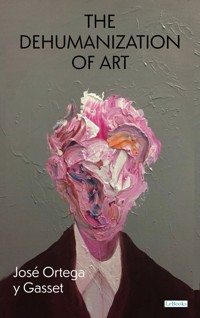
The Dehumanization of Art, published in 1925 by José Ortega y Gasset, is a seminal essay that explores the nature and purpose of modern art. Ortega examines the radical transformation of artistic expression in the early twentieth century, arguing that contemporary art deliberately distances itself from traditional human emotions and realism. Rather than seeking to represent life or evoke empathy, modern art turns toward abstraction, intellect, and form — an art that is "dehumanized." For Ortega, this "dehumanization" does not imply a rejection of humanity but a shift in focus: art ceases to mirror the external world or individual sentiment and instead becomes an autonomous creation of forms, colors, and ideas. The artist no longer aims to move the spectator emotionally but to engage them intellectually. This change, Ortega suggests, explains why many people feel alienated from modern art — it demands a cultivated sensitivity and an active, analytical participation rather than passive enjoyment. The essay also explores the elitist dimension of modern art. Ortega argues that its complexity and abstraction naturally divide audiences: only those who can appreciate its intellectual and aesthetic play are truly able to grasp it. This is not a flaw but a characteristic of a new age in which art serves as a form of cultural refinement rather than mass entertainment. By rejecting sentimentalism and direct representation, modern art reflects a mature, self-conscious civilization that values reflection over emotion. José Ortega y Gasset was a Spanish philosopher and essayist, widely regarded as one of the most influential intellectual figures of 20th-century Spain. His work is characterized by a profound reflection on culture, reason, and human life, proposing a vitalist philosophy that sought to renew European thought from a distinctly Hispanic perspective.
Das E-Book können Sie in Legimi-Apps oder einer beliebigen App lesen, die das folgende Format unterstützen:
Seitenzahl: 250
Veröffentlichungsjahr: 2025
Ähnliche












José Ortega y Gasset
THE DEHUMANIZATION OF ART
Contents
INTRODUCTION
THE DEHUMANIZATION OF ART
UNPOPULARITY OF THE NEW ART
ARTISTIC ART
A FEW DROPS OF PHENOMENOLOGY
FIRST INSTALLMENT ON THE DEHUMANIZATION OF ART
INVITATION TO UN DETESTANDING
MORE ABOUT THE DEHUMANIZATION OF .ART
TABOO AND METAPHOR
SURREALISM AND INFRAREALISM
INVERSION
ICONOCLASM
NEGATIVE INFLUENCE OF THE PAST
DOOMED TO IRONT
ART A THING OF NO CONSEQUENCE
CONCLUSION
NOTES ON THE NOVEL DECLINE OF THE SHOVEL
AUTOPSY
NO DEFINITIONS
THE NOVEL A SLUGGISH GENRE
FUNCTION AND SUBSTANCE
TWO THEATERS
DOSTOEVSKI AND PROUST
ACTION AND CONTEMPLATION
THE NOVEL AS ‘‘PROVINCIAL LIFE”
IMPERVIOUSNESS
THE NOVEL A 'DENSE FORM
DECLINE AND PERFECTION
IMAGINARY PSYCHOLOGY
ON POINT OF VIEW IN THE ARTS
IN SEARCH OF GOETHE FROM WITHIN
THE SELF AND THE OTHER
INTRODUCTION
José Ortega y Gasset
1883 – 1955
José Ortega y Gasset was a Spanish philosopher and essayist, regarded as one of the most influential figures in 20th-century Spanish thought. His work is characterized by a profound reflection on culture, reason, and human life, proposing a vitalist philosophy that sought to renew European thought from a distinctly Hispanic perspective.
Early Life and Education
He was born in Madrid into a family deeply connected to journalism and culture. He studied at the University of Deusto and the Central University of Madrid, completing his education in Germany, where he was influenced by Neo-Kantianism and by thinkers such as Wilhelm Dilthey and Edmund Husserl. His time in the German intellectual environment was decisive for the development of his philosophy.
Philosophy and Works
Ortega y Gasset developed a philosophy centered on the idea of vital reason, which reconciles rationality with the concrete life of the individual. He rejected both idealism and materialism, proposing that “I am I and my circumstance,” one of his most famous phrases, expresses his vision of the human being as inseparable from their environment and historical context.
Among his most notable works are Meditations on Quixote (1914), The Revolt of the Masses (1930), and Invertebrate Spain (1921). In the latter, Ortega analyzes the emergence of the “mass man,” a symbol of an era in which mediocrity and the lack of spiritual values threaten to dominate public and cultural life.
Influence and Legacy
Ortega was also an important renovator of political and cultural thought in Spain. His work as a professor at the University of Madrid and his active participation in the country’s intellectual life made him a reference for liberal and pro-European thought. Moreover, his influence extended beyond Spain’s borders, reaching Latin America and the main European intellectual circles.
José Ortega y Gasset died in Madrid on October 18, 1955.
His thought, centered on the affirmation of life, culture, and individual freedom, remains an essential source for understanding modernity and the dilemmas of contemporary humanity.
About the Work
The Dehumanization of Art, published in 1925 by José Ortega y Gasset, is a seminal essay that explores the nature and purpose of modern art. Ortega examines the radical transformation of artistic expression in the early twentieth century, arguing that contemporary art deliberately distances itself from traditional human emotions and realism. Rather than seeking to represent life or evoke empathy, modern art turns toward abstraction, intellect, and form — an art that is “dehumanized.”
For Ortega, this “dehumanization” does not imply a rejection of humanity but a shift in focus: art ceases to mirror the external world or individual sentiment and instead becomes an autonomous creation of forms, colors, and ideas. The artist no longer aims to move the spectator emotionally but to engage them intellectually. This change, Ortega suggests, explains why many people feel alienated from modern art — it demands a cultivated sensitivity and an active, analytical participation rather than passive enjoyment.
The essay also explores the elitist dimension of modern art. Ortega argues that its complexity and abstraction naturally divide audiences: only those who can appreciate its intellectual and aesthetic play are truly able to grasp it. This is not a flaw but a characteristic of a new age in which art serves as a form of cultural refinement rather than mass entertainment. By rejecting sentimentalism and direct representation, modern art reflects a mature, self-conscious civilization that values reflection over emotion.
THE DEHUMANIZATION OF ART
UNPOPULARITY OF THE NEW ART
Among the many excellent, though inadequately developed, ideas of the eminent French philosopher J. M. Guyau we must count his intention to study art from a sociological point of view.* The subject may at first appear unprofitable. Approaching art from the side of its social effects looks very much like putting the cart before the horse, or studying a man by his shadow. The social effects of art seem such an accidental thing, so remote from the aesthetic essence that it does not quite appear how, starting from them, we can ever hope to penetrate into the inner frame of styles. Guyau doubtless failed to make the best of his ingenious idea. His short life and tragic rushing toward death prevented him from clarifying his insight and distinguishing the obvious aspects from the hidden but more relevant ones. We may almost say that of his book Art from a Sociological Point of View only the title exists; the rest is yet to be written.
The fruitfulness of a sociology of art was revealed to me unexpectedly when, a few years ago, I wrote a brief study on the new epoch in music which begins with De-bussy.f My purpose was to define as clearly as possible the difference of style between the new music and traditional music. The problem was strictly aesthetic, and yet it turned out that the shortest way of tackling it started from a sociological fact: the unpopularity of the new music.
In the following I will speak more in general and consider all the arts that are still somewhat alive in the Western world — that is, not only music, but also painting, poetry, and the theater. It is amazing how compact a unity every historical epoch presents throughout its various manifestations. One and the same inspiration, one and the same biological style, are recognizable in the several branches of art. The young musician — himself unaware of it — strives to realize in his medium the same aesthetic values as his contemporary colleagues — the poet, the painter, the playwright — in theirs. And this identity of artistic purpose necessarily produces identical sociological consequences. In fact, the unpopularity of the new music has its counterpart in a similar unpopularity of the other Muses. All modern art is unpopular, and it is so not accidentally and by chance, but essentially and by fate.
It might be said that every newcomer among styles passes through a stage of quarantine. The battle of Her-nani comes to mind, and all the other skirmishes connected with the advent of Romanticism. However, the unpopularity of present-day art is of a different kind. A distinction must be made between what is not popular and what is unpopular. A new style takes some time in winning popularity; it is not popular, but it is not unpopular either. The break-through of Romanticism, although a frequently cited example, is, as a sociological phenomenon, exactly the opposite of the present situation of art. Romanticism was very quick in winning “the people” to whom the old classical art had never appealed. The enemy with whom Romanticism had to fight it out was precisely a select minority irretrievably sold to the classical forms of the “ancien regime” in poetry. The works of the romanticists were the first, after the invention of printing, to enjoy large editions. Romanticism was the prototype of a popular style. First-born of democracy, it was coddled by the masses.
Modern art, on the other hand, will always have the masses against it. It is essentially unpopular; moreover, it is antipopular. Any of its works automatically produces a curious effect on the general public. It divides the public into two groups: one very small, formed by those who are favorably inclined towards it; another very large — the hostile majority. (Let us ignore that ambiguous fauna — the snobs.) Thus the work of art acts like a social agent which segregates from the shapeless mass of the many two different castes of men.
Which is the differentiating principle that creates these two antagonistic groups? Every work of art arouses differences of opinion. Some like it, some don’t; some like it more, some like it less. Such disagreements have no organic character, they are not a matter of principles. A person’s chance disposition determines on which side he will fall. But in the case of the new art the split occurs in a deeper layer than that on which differences of personal taste reside. It is not that the majority does not like the art of the young and the minority likes it, but that the majority, the masses, do not understand it. The old bigwigs who were present at the performance of Hemani understood Victor Hugo’s play very well; precisely because they understood it they disliked it. Faithfully adhering to definite aesthetic norms, they were disgusted at the new artistic values which this piece of art proposed to them.
“From a sociological point of view” the characteristic feature of the new art is, in my judgment, that it divides the public into the two classes of those who understand it and those who do not. This implies that one group possesses an organ of comprehension denied to the other — that they are two different varieties of the human species. The new art obviously addresses itself not to everybody, as did Romanticism, but to a specially gifted minority. Hence the indignation it arouses in the masses. When a man dislikes a work of art, but understands it, he feels superior to it; and there is no reason for indignation. But when his dislike is due to his failure to understand, he feels vaguely humiliated and this rankling sense of inferiority must be counterbalanced by indignant self-assertion. Through its mere presence, the art of the young compels the average citizen to realize that he is just this — the average citizen, a creature incapable of receiving the sacrament of art, blind and deaf to pure beauty. But such a thing cannot be done after a hundred years of adulation of the masses and apotheosis of the people. Accustomed to ruling supreme, the masses feel that the new art, which is the art of a privileged aristocracy of finer senses, endangers their rights as men. Whenever the new Muses present themselves, the masses bristle.
For a century and a half the masses have claimed to be the whole of society. Stravinski’s music or Pirandello’s drama have the sociological effect of compelling the people to recognize itself for what it is: a component among others of the social structure, inert matter of the historical process, a secondary factor in the cosmos of spiritual life. On the other hand, the new art also helps the elite to recognize themselves and one another in the drab mass of society and to learn their mission which consists in being few and holding their own against the many.
A time must come in which society, from politics to art, reorganizes itself into two orders or ranks: the illustrious and the vulgar. That chaotic, shapeless, and undifferentiated state without discipline and social structure in which Europe has lived these hundred and fifty years cannot go on. Behind all contemporary life lurks the provoking and profoimd injustice of the assumption that men are actually equal. Each move among men so obviously reveals the opposite that each move results in a painful clash.
If this subject were broached in politics the passions aroused would run too high to make oneself understood. Fortunately the aforementioned unity of spirit within a historical epoch allows us to point out serenely and with perfect clarity in the germinating art of our time the same symptoms and signals of a moral revision that in politics present themselves obscured by low passions.
"Nolite fieri" the evangelist exhorts us, "sicut equus et mulus quibus non est intellectus” — do not act like horses and mules that lack understanding. The masses kick and do not understand. Let us try to do better and to extract from modern art its essential principle. That will enable us to see in what profound sense modern art is unpopular.
ARTISTIC ART
If the new art is not accessible to every man this implies that its impulses are not of a generically human kind. It is an art not for men in general but for a special class of men who may not be better but who evidently are different.
One point must be clarified before we go on. What is it the majority of people call aesthetic pleasure? What happens in their minds when they “like” a work of art; for instance, a theatrical performance? The answer is easy. A man likes a play when he has become interested in the human destinies presented to him, when the love and hatred, the joys and sorrows of the personages so move his heart that he participates in it all as though it were happening in real life. And he calls a work “good” if it succeeds in creating the illusion necessary to make the imaginary personages appear like living persons. In poetry he seeks the passion and pain of the man behind the poet. Paintings attract him if he finds on them figures of men or women whom it would be interesting to meet. A landscape is pronounced “pretty” if the country it represents deserves for its loveliness or its grandeur to be visited on a trip.
It thus appears that to the majority of people aesthetic pleasure means a state of mind which is essentially undistinguishable from their ordinary behavior. It differs merely in accidental qualities, being perhaps less utilitarian, more intense, and free from painful consequences. But the object towards which their attention and, consequently, all their other mental activities are directed is the same as in daily life: people and passions. By art they understand a means through which they are brought in contact with interesting human affairs. Artistic forms proper — figments, fantasy — are tolerated only if they do not interfere with the perception of human forms and fates. As soon as purely aesthetic elements predominate and the story of John and Mary grows elusive, most people feel out of their depth and are at a loss what to make of the scene, the book, or the painting. As they have never practiced any other attitude but the practical one in which a man’s feelings are aroused and he is emotionally involved, a work that does not invite sentimental intervention leaves them without a cue.
Now, this is a point which has to be made perfectly clear. Not only is grieving and rejoicing at such human destinies as a work of art presents or narrates a very different thing from true artistic pleasure, but preoccupation with the human content of the work is in principle incompatible with aesthetic enjoyment proper.
We have here a very simple optical problem. To see a thing we must adjust our visual apparatus in a certain way. If the adjustment is inadequate the thing is seen indistinctly or not at all. Take a garden seen through a window. Looking at the garden we adjust our eyes in such a way that the ray of vision travels through the pane without delay and rests on the shrubs and flowers. Since we are focusing on the garden and our ray of vision is directed toward it, we do not see the window but look clear through it. The purer the glass, the less we see it. But we can also deliberately disregard the garden and, withdrawing the ray of vision, detain it at the window. We then lose sight of the garden; what we still behold of it is a confused mass of color which appears pasted to the pane. Hence to see the garden and to see the windowpane are two incompatible operations which exclude one another because they require different adjustments.
Similarly a work of art vanishes from sight for a beholder who seeks in it nothing but the moving fate of John and Mary or Tristan and Isolde and adjusts his vision to this. Tristan’s sorrows are sorrows and can evoke compassion only in so far as they are taken as real. But an object of art is artistic only in so far as it is not real. In order to enjoy Titian’s portrait of Charles the Fifth on horseback we must forget that this is Charles the Fifth in person and see instead a portrait — that is, an image, a fiction. The portrayed person and his portrait are two entirely different things; we are interested in either one or the other. In the first case we “live” with Charles the Fifth, in the second we look at an object of art.
But not many people are capable of adjusting their perceptive apparatus to the pane and the transparency that is the work of art. Instead they look right through it and revel in the human reality with which the work deals. When they are invited to let go of this prey and to direct their attention to the work of art itself they will say that they cannot see such a thing, which indeed they cannot, because it is all artistic transparency and without substance.
During the nineteenth century artists proceeded in all too impure a fashion. They reduced the strictly aesthetic elements to a minimum and let the work consist almost entirely in a fiction of human realities. In this sense all normal art of the last century must be called realistic. Beethoven and Wagner were realistic, and so was Chateaubriand as well as Zola. Seen from the vantage-point of our day Romanticism and Naturalism draw closer together and reveal their common realistic root.
Works of this kind are only partially works of art, or artistic objects. Their enjoyment does not depend upon our power to focus on transparencies and images, a power characteristic of the artistic sensibility; all they require is human sensibility and willingness to sympathize with our neighbor’s joys and worries. No wonder that nineteenth century art has been so popular; it is made for the masses inasmuch as it is not art but an extract from life. Let us remember that in epochs with two different types of art, one for minorities and one for the majority, the latter has always been realistic.*
I will not now discuss whether pure art is possible. Perhaps it is not; but as the reasons that make me inclined to think so are somewhat long and difficult the subject better be dropped. Besides, it is not of major importance for the matter in hand. Even though pure art may be impossible there doubtless can prevail a tendency toward a purification of art. Such a tendency would effect a progressive elimination of the human, all too human, elements predominant in romantic and naturalistic production. And in this process a point can be reached in which the human content has grown so thin that it is negligible. We then have an art which can be comprehended only by people possessed of the peculiar gift of artistic sensibility — an art for artists and not for the masses, for “quality” and not for hoi polloi.
That is why modern art divides the public into two classes, those who understand it and those who do not understand it — that is to say, those who are artists and those who are not. The new art is an artistic art.
I do not propose to extol the new way in art or to condemn the old. My purpose is to characterize them as the zoologist characterizes two contrasting species. The new art is a world-wide fact. For about twenty years now the most alert young people of two successive generations — in Berlin, Paris, London, New York, Rome, Madrid — have found themselves faced with the undeniable fact that they have no use for traditional art; moreover, that they detest it. With these young people one can do one of two things: shoot them, or try to understand them. As soon as one decides in favor of the latter it appears that they are endowed with a perfectly clear, coherent, and rational sense of art. Far from being a whim, their way of feeling represents the inevitable and fruitful result of all previous artistic achievement. Whimsical, arbitrary, and consequently unprofitable it would be to set oneself against the new style and obstinately remain shut up in old forms that are exhausted and the worse for wear. In art, as in morals, what ought to be done does not depend on our personal judgment; We have to accept the imperative imposed by the time. Obedience to the order of the day is the most hopeful choice open to the individual. Even so he may achieve nothing; but he is much more likely to fail if he insists on composing another Wagnerian opera, another naturalistic novel.
In art repetition is nothing. Each historical style can engender a certain number of different forms within a generic type. But there always comes a day when the magnificent mine is worked out. Such, for instance, has been the fate of the romantico-naturalistic novel and theater. It is a naive error to believe that the present infecundity of these two genres is due to lack of talent. What happens is that the possible combinations within these literary forms are exhausted. It must be deemed fortunate that this situation coincides with the emergence of a new artistic sensibility capable of detecting other untouched veins.
When we analyze the new style we find that it contains certain closely connected tendencies. It tends (1) to dehumanize art, (2) to avoid living forms, (3) to see to it that the work of art is nothing but a work of art, (4) to consider art as play and nothing else, (5) to be essentially ironical, (6) to beware of sham and hence to aspire to scrupulous realization, (7) to regard art as a thing of no transcending consequence.
In the following I shall say a few words about each of these features of modern art.
A FEW DROPS OF PHENOMENOLOGY
A great man is dying. His wife is by his bedside. A doctor takes the dying man’s pulse. In the background two more persons are discovered: a reporter who is present for professional reasons, and a painter whom mere chance has brought here. Wife, doctor, reporter, and painter witness one and the same event. Nonetheless, this identical event — a man’s death — impresses each of them in a different way. So different indeed that the several aspects have hardly anything in common. What this scene means to the wife who is all grief has so little to do with what it means to the painter who looks on impassively that it seems doubtful whether the two can be said to be present at the same event.
It thus becomes clear that one and the same reality may split up into many diverse realities when it is beheld from different points of view. And we cannot help asking ourselves: Which of all these realities must then be regarded as the real and authentic one? The answer, no matter how we decide, cannot but be arbitrary. Any preference can be founded on caprice only. All these realities are equivalent, each being authentic for its corresponding point of view. All we can do is to classify the points of view and to determine which among them seems, in a practical way, most normal or most spontaneous. Thus we arrive at a conception of reality that is by no means absolute, but at least practical and normative.
As for the points of view of the four persons present at the deathbed, the clearest means of distinguishing them is by measuring one of their dimensions, namely the emotional distance between each person and the event they all witness. For the wife of the dying man the distance shrinks to almost nothing. What is happening so tortures her soul and absorbs her mind that it becomes one with her person. Or to put it inversely, the wife is drawn into the scene, she is part of it. A thing can be seen, an event can be observed, only when we have separated it from ourselves and it has ceased to form a living part of our being. Thus the wife is not present at the scene, she is in it. She does not behold it, she “lives” it.
The doctor is several degrees removed. To him th'is is a professional case. He is not drawn into the event with the frantic and blinding anxiety of the poor woman. However it is his bounden duty as a doctor to take a serious interest, he carries responsibility, perhaps his professional honor is at stake. Hence he too, albeit in a less integral and less intimate way, takes part in the event. He is involved in it not with his heart but with the professional portion of his self. He too “lives” the scene although with an agitation originating not in the emotional center, but in the professional surface, of his existence.
When we now put ourselves in the place of the reporter we realize that we have traveled a long distance away from the tragic event. So far indeed that we have lost all emotional contact with it. The reporter, like the doctor, has been brought here for professional reasons and not out of a spontaneous human interest. But while the doctor’s profession requires him to interfere, the reporter’s requires him precisely to stay aloof; he has to confine himself to observing. To him the event is a mere scene, a pure spectacle on which he is expected to report in his newspaper column. He takes no feeling part in what is happening here, he is emotionally free, an outsider. He does not “live” the scene, he observes it. Yet he observes it with a view to telling his readers about it. He wants to interest them, to move them, and if possible to make them weep as though they each had been the dying man’s best friend. From his schooldays he remembers Horace’s recipe: “Si vis me flere dolen-dum est primum ip si tibi” — if you want me to weep you must first grieve yourself.
Obedient to Horace the reporter is anxious to pretend emotion, hoping that it will benefit his literary performance. If he does not “live” the scene he at least pretends to “live” it.
The painter, in fine, completely unconcerned, does nothing but keep his eyes open. What is happening here is none of his business; he is, as it were, a hundred miles removed from it. His is a purely perceptive attitude; indeed, he fails to perceive the event in its entirety. The tragic inner meaning escapes his attention which is directed exclusively toward the visual part — color values, lights, and shadows. In the painter we find a maximum of distance and a minimum of feeling intervention.
The inevitable dullness of this analysis will, I hope, be excused if it now enables us to speak in a clear and precise way of a scale of emotional distances between ourselves and reality. In this scale, the degree of closeness is equivalent to the degree of feeling participation; the degree of remoteness, on the other hand, marks the degree to which we have freed ourselves from the real event, thus objectifying it and turning it into a theme of pure observation. At one end of the scale the world — persons, things, situations — is given to us in the aspect of “lived” reality; at the other end we see everything in the aspect of “observed” reality.
At this point we must make a remark that is essential in aesthetics and without which neither old art nor new art can be satisfactorily analyzed. Among the diverse aspects of reality we find one from which all the others derive and which they all presuppose: “lived” reality. If nobody had ever “lived” in pure and frantic abandonment a man’s death, the doctor would not bother, the readers would not understand the reporter’s pathos, and the canvas on which the painter limned a person on a bed surrounded by mourning figures would be meaningless. The same holds for any object, be it a person, a thing, or a situation. The primal aspect of an apple is that in which I see it when I am about to eat it. All its other possible forms — when it appears, for instance, in a Baroque ornament, or on a still life of Cezanne’s, or in the eternal metaphor of a girl’s apple cheeks — preserve more or less that original aspect. A painting or a poem without any vestiges of “lived” forms would be unintelligible, i.e., nothing — as a discourse is nothing whose every word is emptied of its customary meaning.
That is to say, in the scale of realities “lived” reality holds a peculiar primacy which compels us to regard it as “the” reality. Instead of “lived” reality we may say “human” reality. The painter who impassively witnesses the death scene appears “inhuman.” In other words, the human point of view is that, in which we “live” situations, persons, things. And, vice versa, realities — a woman, a countryside, an event — are human when they present the aspect in which they are usually “lived.”
As an example, the importance of which will appear later, let us mention that among the realities which constitute the world are our ideas. We use our ideas in a “human” way when we employ them for thinking things. Thinking of Napoleon, for example, we are normally concerned with the great man of that name. A psychologist, on the other hand, adopts an unusual, “inhuman” attitude when he forgets about Napoleon and, prying into his own mind, tries to analyze his idea of Napoleon as such idea. His perspective is the opposite of that prevailing in spontaneous life. The idea, instead of functioning as the means to think an object with, is itself made the object and the aim of thinking. We shall soon see the unexpected use which the new art has made of this “inhuman” inversion.




